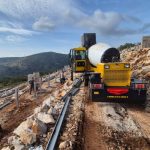
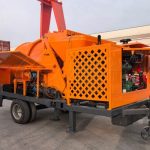
Self loading concrete mixer trucks are becoing a preferred concrete solution for contractors worldwide. By combining loading, mixing, transport, and discharge in one machine, they simplify concrete operations on construction sites.
Let’s find out the key reasons why self loading mixer truck is popular with contractors and why they are increasingly used across a wide range of construction applications.
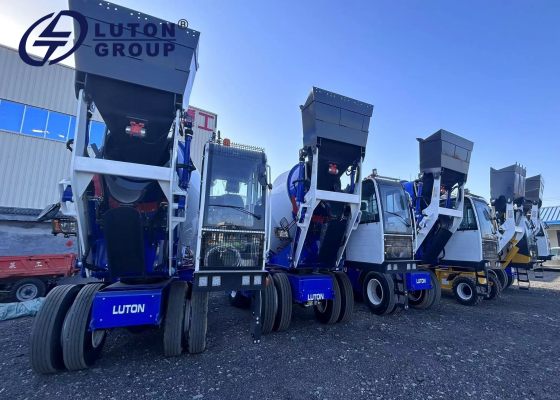
Integrated Loading and Mixing
High Efficiency and Productivity
High Mobility and Site Flexibility
Reduced Labor Requirement
Easy Operation and Control
Low Operating and Maintenance Cost
What Is a Self Loading Mixer Truck
A self loading mixer truck is a self contained concrete production machine designed for on site operation. It integrates material loading, concrete mixing, transportation, and discharge into a single mobile unit.
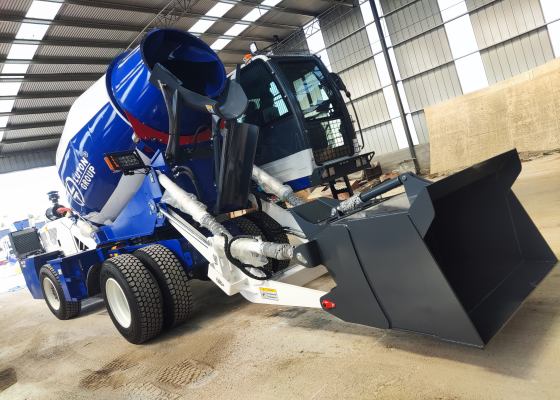
Aggregates and cement are loaded directly using the front mounted bucket, while water is added through a controlled system.
The rotating drum mixes concrete during travel and discharges it directly at the pouring location.
By eliminating the need for separate batching plants, transit mixers, and auxiliary loading equipment, the self loading mixer truck significantly simplifies concrete supply on construction sites.
This makes it particularly suitable for projects where flexibility, speed, and independent operation are required.
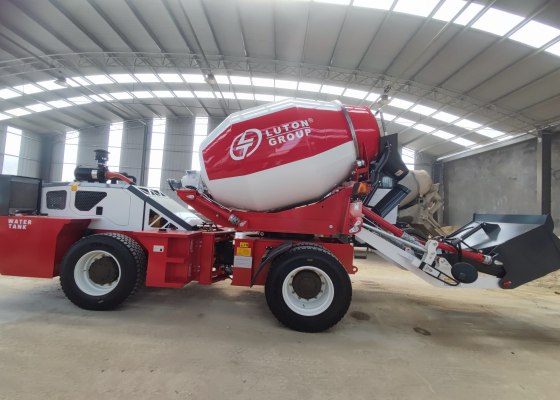
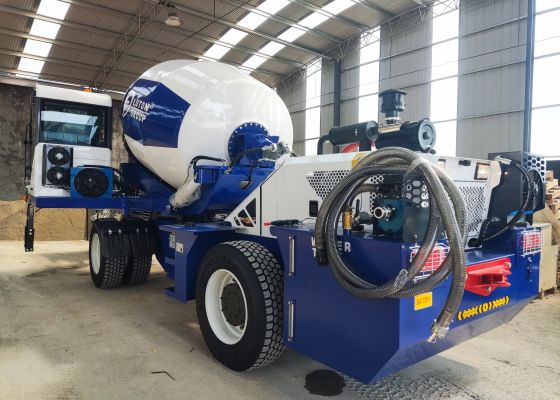
Key Features and Advantages Over Traditional Mixer and Pump
Combine loading, mixing, transportation, and discharge in a single mobile unit, self loading mixer trucks are designed to simplify concrete operations while improving job site efficiency.
Their popularity is driven by several practical features that directly address common construction challenges.
Integrated Loading and Mixing
The built in loading bucket allows raw materials to be collected and fed directly into the mixing drum. This eliminates the need for separate loaders or concrete batching equipment.
Concrete mixing is completed on site, reducing dependency on external supply and minimizing waiting time.
High Efficiency and Productivity
Self loading mixer trucks are designed for continuous concrete production and transportation.
Depending on model and drum capacity, they can produce and deliver multiple batches of concrete per hour.
Concrete mixing continues during travel, eliminating idle time between loading, mixing and pouring.
This continuous operation significantly reduces waiting time on site and improves overall job progress.
For projects with frequent small to medium volume pours, this productivity advantage becomes especially noticeable.
High Mobility and Site Flexibility
The compact, mobile design enables operation in confined spaces, uneven terrain, and multiple pouring points.
Unlike traditional mixer + pump combinations, which require additional coordination and transport, self loading mixer trucks adapt easily to complex or decentralized job sites.
Reduced Labor Requirement
One machine can replace multiple pieces of equipment and operators. Loading, mixing, and transportation are handled by a single operator.
Lower labor dependency helps contractors control costs and simplify site management.

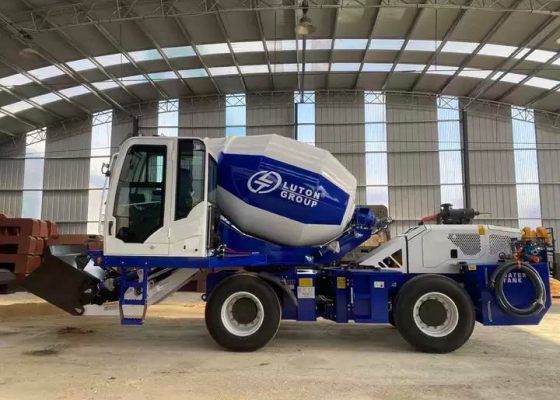
Easy Operation and Control
Self loading mixer trucks are designed for straightforward operation on construction sites.
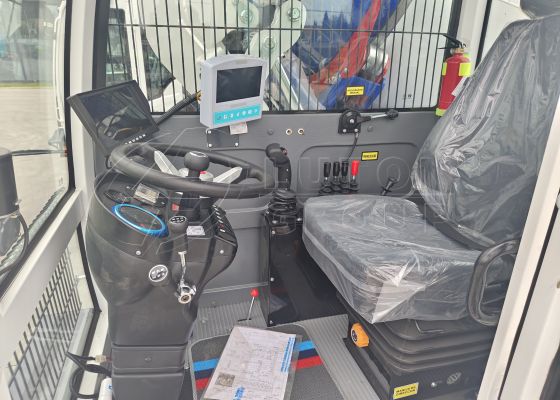
Driving, loading, mixing and discharge functions are integrated into a single and intuitive control system.
Basic training is sufficient for daily operation, reducing reliance on highly specialized operators.
This lowers training costs and makes workforce management more flexible for contractors.
Low Operating and Maintenance Cost
The integrated design of self loading mixer trucks eliminates the need for additional loaders, batching plants, or transit mixers.
Fewer machines mean lower initial investment and reduce fuel consumption.
Maintenance is simplified due to fewer auxiliary systems and a compact structure.
Wear parts and routine servicing costs are generally lower compared to multi-equipment concrete production setups.
Applications in Real Construction Scenarios
Self-loading trucks are widely used in construction projects that require flexible concrete production and fast site response.
Their integrated design allows them to adapt to diverse working conditions without relying on fixed infrastructure.
Small and Medium Construction Projects
For residential buildings, commercial structures, and small industrial projects, self loading mixer trucks provide on site concrete production without the need for batching plants.
They are well suited for projects with limited space and frequent concrete pours.
Road and Infrastructure Construction
Self loading concrete mixers are commonly used in road construction, rural highways, and municipal infrastructure projects.
Their mobility allows concrete to be delivered efficiently along linear work zones and multiple pouring points.
Remote and Rural Job Sites
In remote areas where ready mix concrete supply is unavailable, self loading mixer trucks operate independently.
Materials can be sourced locally, mixed on site, and poured without transport delays.
Repair and Maintenance Works
For maintenance projects such as pavement repair, foundation reinforcement, and small structural upgrades, concrete demand is often intermittent.
Self loading mixer trucks allow concrete to be produced in the required quantity, reducing materials waste and downtime.
Multi Site and Scattered Pouring Locations
Projects with dispersed pouring points benefit from the machine’s ability to move quickly between location.
Continuous mixing during travel ensures consistent concrete quality across multiple pours.
A Favorite in the Rental Market
We all know that construction machinery rental has always been a very potential market. When there is no project, renting out the equipment will allow it to create maximum profit. However, the popularity of construction machinery in the rental market varies depending on the use of the site and its function.
To face more small and medium-sized project requirements, as well as some narrow working places. Self-loading trucks, which can perform multiple jobs and operate flexibly, have become a favorite in the rental market in recent years.
More and more project contractors are buying equipment while considering its investment prospects and rental benefits. And self-loading trucks are certainly a good choice.

Key Considerations When Choosing a Self Loading Mixer Truck
Selecting the right self loading mixer truck requires careful attention to project requirements, site conditions, and operational goals.
The following factors are essential to ensure efficient, safe, and reliable performance on site.
Appropriate Truck Size
Choose a truck that matches the typical concrete volume per hour. Oversized models may operate under low load, wasting fuel and space, while undersized models may struggle to meet demand.
Site Road and Terrain Compatibility
Consider access roads, slopes, and ground conditions at the construction site. A model with sufficient ground clearance, stable drive system, and compact dimension ensures mobility and safe operation.


Maintenance Planning
Regular serving of the drum, hydraulics, and moving parts is critical.
A proactive maintenance schedule prevents downtime and extends service life.
Pump and Boom Configuration
If concrete pouring requires a pump or boom, select a truck with suitable capacity and reach.
Proper configuration ensures smooth pouring and consistent concrete quality across different points on site.
Evaluating these factors before purchase helps optimize productivity, reduce operational challenges, and maximize return on investment.
Careful selection ensures the self loading mixer truck performance reliably across diverse job sites.
FAQs About Self Loading Mixer Trucks
What capacity ranges are available for self loading mixer trucks?
Self loading mixer trucks come in a variety of drum capacities, typically ranging from 1.2m³ to 6.5 m³.
Choose a size that matches project volume and average hourly concrete demand.
Can it operate on rough terrain or uneven terrain?
Yes, many models are designed with high ground clearance and robust drive systems. They can navigate construction sites with slopes, narrow roads, or uneven surfaces efficiency.
How often should maintenance be performed?
Routine maintenance includes drum inspection, lubrication, and hydraulic system checks.
Regular serving ensures reliable operation and extends the truck’s service life.
Is it suitable for remote construction sites?
Absolutely. Self loading mixer trucks operate independently without relying on batching plants or external mixers.
They can source materials locally and produce concrete on site as needed.
Can they be used for multiple pouring points on one site?
Yes. Their mobility and on-site mixing allow concrete delivery to multiple locations efficiency. Continuous mixing during travel ensures consistent concrete quality.
Do self loading mixer trucks require specialized operators?
No. The controls are generally simple and intuitive. Basic training is sufficient for safe and efficient operation.
Self loading mixer trucks offer a complete solution for efficient concrete production and delivery.
Their integrated design saves time, reduces operational costs, and provides flexible operation across diverse construction sites.
Ideal for small to medium projects, roadworks, infrastructure, and remote sites, these trucks improve overall construction efficiency and ensure consistent concrete quality.
Careful evaluation of project requirements and site conditions ensures maximum performance and return on investment.
Contractors seeking reliable, mobile, and versatile concrete solutions can consider self loading mixer trucks to streamline operations and enhance productivity.
Specifications of LUTON Self Loading Concrete Mixer Truck Models
| Model | LT-1.2 | LT-1.8 | LT-2.0 | LT-2.6 | LT3.5 | LT-4.0 | LT5.5 | LT-6.5 |
| Discharge Capacity | 1.2m3 | 1.8m3 | 2m3 | 2.6m3 | 3.5m3 | 4m3 | 5.5m3 | 6.5m3 |
| Engine Model | YUNNEI Supercharged Engine | Yuchai 4102 | Yuchai 4102 | Yuchai 4102 | Yuchai 4105 | Yuchai 4108 | FAW XICHAI 6110 | Weichai Deutz 6105 |
| Rated Power | 58KW | 78KW | 78KW | 78KW | 85KW | 91KW | 92KW~110KW | 92KW~110KW |
| Gear | 4 forward 4 back | 4forward 4 back | 4 forward 4 back | 4 forward 4 back | 4 forward 4 back | 4 forward 4 back | 4 forward 4 back | 4 forward 4 back |
| Oil Tank | 16 Liters | 16 Liters | 16 Liters | 16 Liters | 16 Liters | 16 Liters | 16 Liters | 16 Liters |
| Water Tank | 400L | 500L | 500L | 500L | 620L | 660L | 860L | 1465L |
| Water Supply | Time Relay | Time Relay | Time Relay | Time Relay | Time Relay | Time Relay | Time Relay | Time Relay |
| Overall Dimensions (L*W*H) | 6400*2550*2450 | 7300*2650*3750 | 7300*2650*3750 | 7800*2720*3000 | 7800*2720*3300 | 7500*2800*3600 | 8450*3100*4580 | 8450*3050*3860 |