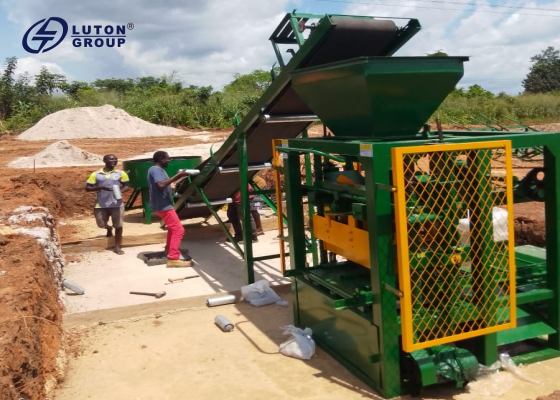
Small brick producing line in Ghana is a successful case of LUTON GROUP. See how it was used in Ghana to produce high-quality construction blocks.
The demand for affordable building materials has been increasing rapidly in many African countries. Among them, Ghana has seen significant growth in housing construction, infrastructure development, and community building projects. As a result, efficient and cost-effective brick manufacturing solutions are becoming increasingly important.
To meet this demand, a small brick producing line was successfully installed and operated in Ghana. This compact yet efficient production line helps local contractors produce high-quality bricks for residential buildings and small infrastructure projects.
Compared with large industrial brick factories, a small brick production line offers lower investment costs, flexible installation, and easier operation. These advantages make it an ideal solution for small and medium construction businesses.
In this case study, we will explore:
- The project background of the small brick producing line in Ghana
- Equipment configuration and working process
- Key advantages of the brick production line
- Why small brick making plants are popular in developing markets
Brick Production Demand in Ghana
Ghana has experienced steady urbanization over the past decade. The increasing demand for housing and public infrastructure has created a strong market for locally produced construction materials.
However, many traditional brick production methods still rely on manual labor and inefficient equipment. This leads to several challenges:
- Low production efficiency
- Inconsistent brick quality
- High labor costs
- Limited production capacity
To solve these problems, a local construction company decided to invest in a small brick producing line that could improve production efficiency while maintaining affordable investment costs.
After evaluating several suppliers, the customer in Ghana selected a compact brick production solution, the QT4-24 small brick producing line, which offered reliable output, easy operation, and suitable capacity for local housing and infrastructure projects.
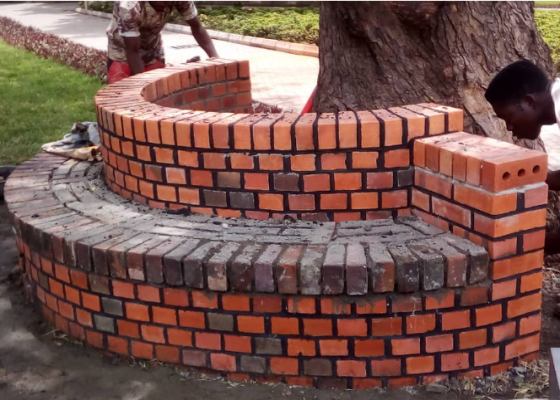
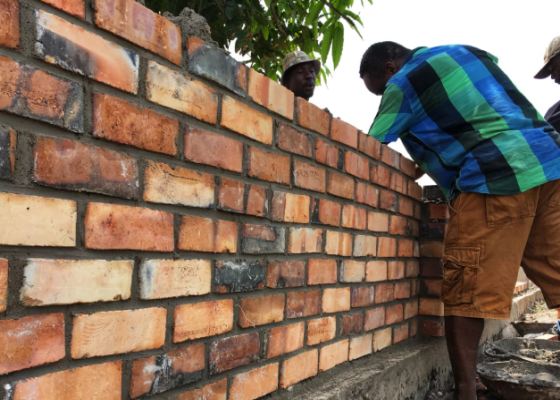
Equipment Configuration of the Small Brcik Producing Line
The small brick producing line in Ghana consists of several key machines that work together efficiently. The core of the production line is the QT4-24 brick making machine, a semi-automatic hydraulic press capable of producing high-quality concrete blocks consistently.
Other equipment includes:
- Concrete mixer
- Belt conveyor
- Brick pallet system
- Control system
This configuration allow the plant to produce concrete bricks continuously with stable quality.
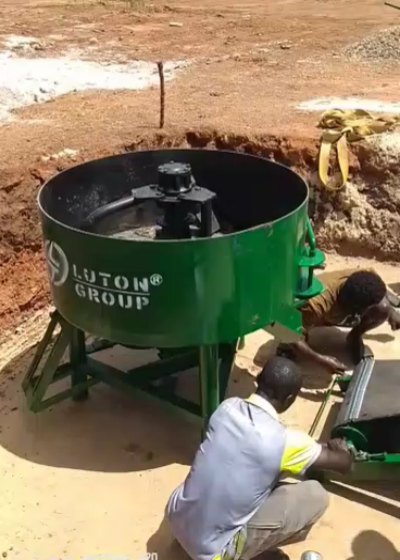
Concrete Mixing System
The production process begins with the concrete mixing system.
Raw materials such as cement, sand, stone powder, and water are mixed thoroughly to create the concrete mixture used for brick production.
A reliable concrete mixer ensures:
- Uniform mixing of materials
- Consistent concrete strength
- Stable brick quality
Proper mixing is essential for producing durable construction bricks.
Brick Making Machine
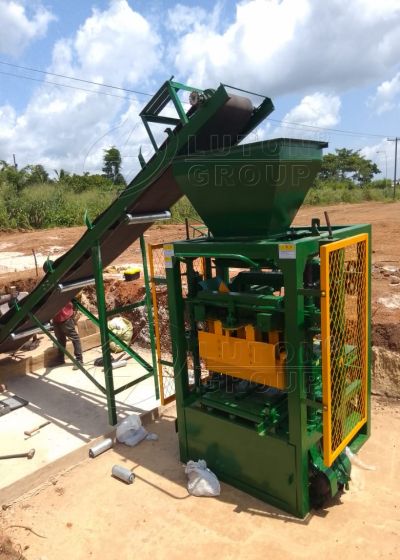
The core equipment of the production line is the brick making machine QT4-24.
This machine uses hydraulic pressure and vibration technology to compress the concrete mixture into solid bricks. It is widely recognized for its reliability and consistent performance.
Key advantages include:
- High molding pressure suitable for QT4-24
- Accurate brick dimensions
- Strong brick density
- Stable production performance
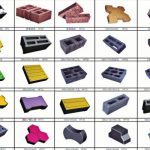
By changing molds, the QT4-24 can produce different types of blocks such as:
- Solid bricks
- Hollow blocks
- Paving bricks
Conveyor and Material Handling System
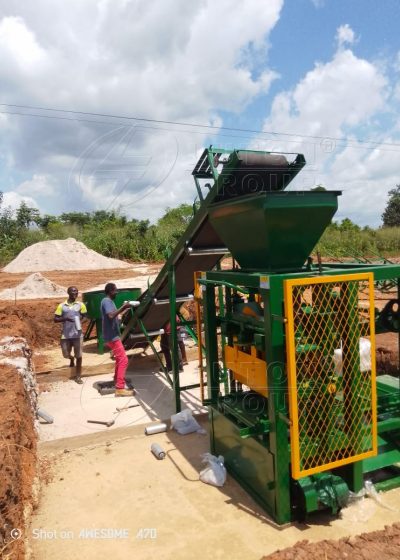
A belt conveyor is used to transport mixed materials from the mixer to the brick making machine.
This automated material handling system improves production efficiency and reduces manual labor.
Brick Pallet and Stacking System
After molding, the bricks are placed on pallets and transported to the curing area.
Proper curing ensures that the bricks reach the required strength and durability before being used in construction.
Advantages of the Small Brick Producing Line
The installation of the small brick producing line in Ghana has provided several important benefits for the local construction company.
Lower Investment Cost
Compared with large brick manufacturing plants, a small brick production line in Ghana requires much lower initial investment.
This makes it suitable for:
- Small construction companies
- Local entrepreneurs
- Building material suppliers
Stable Brick Quality
The use of modern brick making equipment ensures that each brick has consistent dimensions and strength.
High-quality bricks are essential for safe and durable building construction.
Flexible Production
Another major advantage is the flexibility of the production line.
By changing molds, the brick machine can produce different types of blocks used in various construction applications.
Brick Production Process
The working process of the small brick producing line includes several key steps.
STEP 1 – Raw Material Preparation
Cement, sand, aggregates, and water are prepared according to the required mixing ratio.
STEP 2 – Concrete Mixing
The materials are mixed in the concrete mixer until a uniform mixture is achieved.
STEP 3 – Brick Molding
The mixed concrete is transported to the brick making machine where hydraulic pressure and vibration form the bricks.
STEP 4 – Palletizing
Fresh bricks are placed on pallets and transported for curing.
STEP 5 – Brick Curing
Proper curing ensures the bricks reach the necessary strength before being used in construction.
Brick Machine Specifications
The small brick production line installed in Ghana includes a compact brick making machine with the following typical specifications.
| Item | Specification |
| Model | QT4-24 |
| Production Capacity | 3000-5000 bricks per day |
| Brick Type | Hollow blocks/solid bricks |
| Power | 15-25 kW |
| Pallet Size | 850×550 mm |
| Operation | Semi-automatic |
The QT4-24 brick making machine provides an efficient balance between production capacity and investment cost, making it ideal for small to medium-sized construction projects.
Why Small Brick Production Lines Are Popular in Africa
Small brick plants are increasingly popular in countries such as Ghana because they provide practical solutions for local construction markets.
Key reasons include:
- Rapid urban development
- High demand for affordable housing
- Local production of building materials
- Reduced transportation costs
A small brick production line allows entrepreneurs to start brick manufacturing business with relatively low investment.


Professional Brick Production Line Manufacturer
Choosing a reliable manufacturer for the QT4-24 small brick producing line ensures stable equipment performance and long service life. LUTON provides professional installation, technical support, and spare parts supply globally.
A professional supplier should provide:
- Durable brick machine structure
- Advanced vibration technology
- Reliable hydraulic systems
- Technical installation support
- Global spare parts supply
With extensive experience in construction equipment manufacturing, LUTON provides efficient small brick producing lines suitable for construction material production worldwide.


People Also Ask About Brick Production Lines
What is a brick producing line?
A brick producing line is a set of machines used to manufacture construction bricks automatically. It usually includes a concrete mixer, brick making machine, conveyor system, and curing area.
How many bricks can a small brick production line produce?

A typical small brick producing line can produce between 3000 and 5000 bricks per day, depending on machine capacity and working hours.
What materials are used to produce concrete bricks?
Concrete bricks are usually made from:
- Cement
- Sand
- Aggregate
- Water
These materials are mixed and compressed in a brick machine to form solid construction blocks.
Is a small brick production line profitable?
Yes. A small brick producing line can highly profitable in areas with strong demand for building materials.
Local brick production reduces transportation costs and ensures a stable supply for construction projects.
What is the QT4-24 brick machine used for?
The QT4-24 brick making machine is used in small brick producing lines to manufacture solid and hollow concrete blocks efficiently for construction projects.
Frequently Asked Questions
How much does a small brick producing line costs?
The price of a small brick producing line depends on machine capacity, automation level, and equipment configuration.
Compact production liens generally require much lower investment compared with large brick factories.
How much spare is required for a small brick plant?
A small brick production plant typically requires 500-1000 square meters, including production, curing, and storage areas.

What types of bricks can the machine produce?
By changing molds, the brick machine can produce:
- Hollow blocks
- Solid bricks
- Paving bricks
- Interlocking bricks
How long does brick production equipment last?
High-quality brick machines can operate for many years when properly maintained.
Regular maintenance ensures stable production performance and longer equipment lifespan.
Conclusion
The successful installation of the small brick producing line in Ghana demonstrates how compact brick manufacturing solutions can significantly improve local construction material production.
With lower investment costs, efficient production capacity, and reliable brick quality, small brick production lines provide an excellent opportunity for construction companies and entrepreneurs to enter the building materials market.
As the demand for housing and infrastructure continues to grow, small brick producing lines will play an increasingly important role in supporting sustainable construction development in Ghana and other emerging markets.