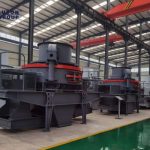
Cone crushing plant is widely used for secondary and tertiary crushing in quarry, mining, and aggregate production. It combines a cone crusher with feeding, screening, conveying, and control systems to produce uniform aggregates with high efficiency and stable output. Designed to process pre-crushed materials., cone crushing plants are suitable for both stationary and mobile applications, offering flexible configurations to meet different capacity and site requirements.
High Crushing Efficiency
Uniform Particle Shape
Reliable Operation
Flexible Configurations
Low Wear Costs
What Is A Cone Crushig Plant
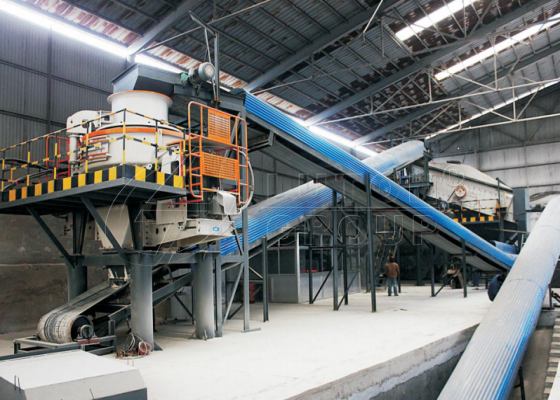
A cone crushing plant is a complete crushing system built around a cone crusher as the main crushing unit. Unlike a standalone cone crusher, it integrates feeding, screening, conveying, and control equipment into a coordinated production line. In a typical crushing process, the cone plant operates after primary crushing, receiving material from a jaw crusher and reducing it to the required size for aggregate or mineral processing. Depending on the configuration, it can work in an open or closed circuit to control final product size and capacity. This system-level design ensures stable operation, high productivity, and consistent output quality in continuous crushing applications.
Main Components of a Cone Crushing Plant
A cone crushing plant consists of several coordinated systems designed to ensure stable, efficient, and continuous operation.
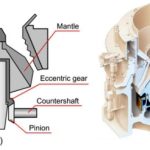
The cone crusher unit is the core component, responsible for secondary or tertiary crushing. It applies a lamination crushing mechanism, in which material is compressed between the mantle and concave. This crushing method improves throughput, reduced flaky particles, and lowers wear cost when processing hard rock materials.
The screening system is essential for particle size classification and process control. Vibrating screens separate crushed material into different size fractions, allowing qualified products to be discharged while oversized material is directed back to the cone crusher in a closed-circuit configuration. This continuous screening and recirculation process ensures stable product gradation and consistent output quality.

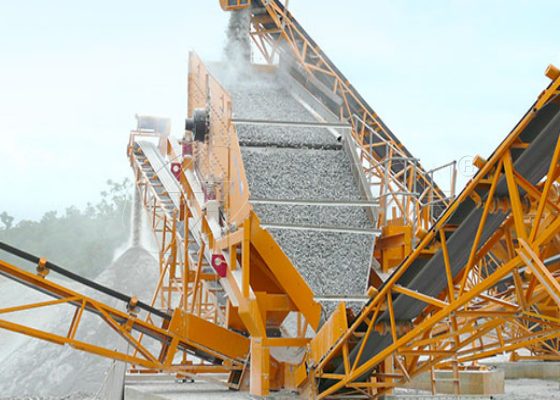
The feeding and conveying systems regulate materials flow throughout the plant. Vibrating feeders provide uniform feeding to prevent overloading, while belt conveyors transfer materials efficiently between crushing and screening stages.
The control and electric system coordinates the operation of all components. Through centralized control of motors, sensors, and protection devices, the plant maintains stable operation, improves safety, and enhances overall production efficiency.


Types of Cone Crushing Plants
Cone crushing plants can be configured in different forms to match specific production requirements and site conditions.
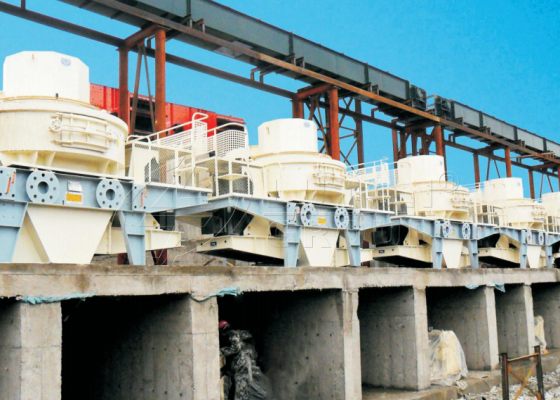
The most common type is the stationary cone crushing plant, which is installed on a fixed foundation and designed for long-term, high-capacity operation. It is widely used in large quarries and mining projects where stable output and low operating cost are priorities.
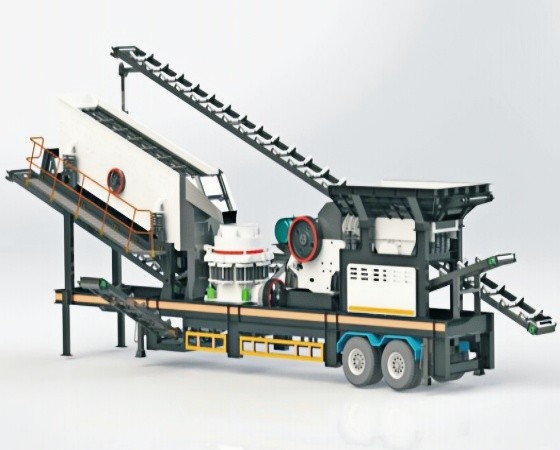
The mobile cone crushing plant integrates the cone crusher, screening unit, and conveyors onto a wheeled or tracked chassis. This configuration allows quick relocation between sites and reduces installation time, making it suitable for medium-scale projects or applications requiring frequent site changes.
Another important configuration is the closed-circuit cone crushing plant, which combines a cone crusher with a vibrating screen to form a complete crushing and screening loop. By continuously recirculating oversized material, this setup provides precise control over final product size and is commonly used in aggregate production lines with strict grading requirements.
Various crusher machine types, please refer to Types Of Stone Crusher.


Applications of Cone Crushing Plant
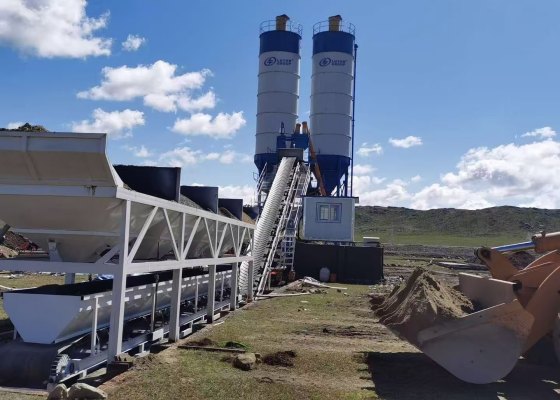
Cone crushing plants are widely used across multiple industries where consistent aggregate size and high efficiency are required. In quarrying, they process hard rocks such as granite, basalt, and limestone into high-quality aggregates for construction and road projects. In mining, they are employed for secondary and tertiary crushing of ore, ensuring uniform particle size for downstream processing. Concrete and asphalt plants also utilize cone crushing plants to produce aggregates that meet strict gradation standards. Additionally, mobile cone crushing plants are suitable for temporary sites or projects requiring flexible relocation. Overall, these applications demonstrate the versatility of cone crushing plants in meeting varied production demands.

Advantages and Limitations of Cone Crushing Plant
Advantages
- High crushing efficiency
Lamination crushing reduces flaky particles and increase throughput.
- Uniform particle shape
Produces well-graded aggregates suitable for concrete and asphalt production.
- Reliable operation
Robust design with overload protection and hydraulic adjustment ensures stable performance.
- Flexible configurations
Stationary, mobile, and closed-circuit options adapt to different site and capacity requirements.
- Low wear cost
Durable components minimize maintenance and replacement frequency.

Limitations
- Not suitable for sticky for sticky or wet materials: May clog or reduce efficiency.
- Higher initial investment: Compared with impact crushing plants, upfront costs are larger.
- Less adaptable for very fine crushing: Secondary and tertiary applications are preferred.
How to Choose the Right Cone Crushing Plant
Selecting the right cone crushing plant depends on several critical factors to ensure optimal performance and cost-efficiency.
Capacity requirements are the first consideration, so the desired tons per hour and the expected feed size should be determined.
Material hardness and abrasiveness influence the type of cone crusher and liner selection, as harder materials require more robust designs.
Final product requirements are also essential. If a uniform, cubical aggregate is needed for concrete or asphalt, a closed-circuit cone crushing plant with screening is recommended.
Site conditions determine mobility of the crushing plants. Stationary plants suit long-term installations, while mobile crushing plants offer flexibility for temporary or frequently changing sites.
Budget and operating costs should be evaluated alongside technical needs. Higher initial investment may be justified by lower maintenance and longer service life.
Considering all these factors – capacity, material, product specification, site conditions, and cost – ensures the cone crushing plant selected meets production goals efficiently and reliably.
For more details on crushing machines choosing, please move to How to Choose a Suitable Stone Crusher.


Price & Cost Factors
The price of cone crushing plant varies depending on several key factors.
Crusher type and size directly affect the cost, as larger or multi-cylinder cone crushers are more expensive.
Plant capacity and configuration – stationary, mobile, or closed-circuit – also influence pricing.
Automation level and control systems add to the investment, but improve efficiency and safety.
Additionally, material quality, optional features, and transportation requirements can impact total cost.
Instead of fixed price, it is best to request a tailored quote based on project-specific requirements to ensure the selected cone crushing plant meets both technical and budgetary needs.
Reliable Cone Crushing Plant Manufacturer
Choosing a trustworthy manufacturer ensures high-quality equipment and reliable after-sales support. LUTON GROUP specializes in designing and producing cone crushing plants with advanced manufacturing technology and customizable configurations. With extensive experience exporting to over 80 countries, LUTON provides tailored solutions for stationary and mobile projects of any scale. Professional after-sales service, spare parts supply, and technical guidance guarantee smooth operation throughout the plant’s lifecycle. Contact LUTON today for a personalized quote, detailed specifications, and working videos to select the ideal cone crushing plant for your project.


FAQs About Cone Crushing Plant
What is the capacity of a cone crushing plant?
Capacity depends on crusher type and configuration. Typical ranges are 50-500 tons per hour (TPH). Common models include 50TPH, 100TPH, 200TPH, and 300TPH plants, with stationary setups offering higher capacities than mobile ones.
Can a cone crushing plant work independently?
Yes, but it is most efficient when used after primary crushing (like a jaw crusher). Independent operation is possible for small-scale or pre-crushed material.
Is a cone crushing plant suitable for limestone?
Yes. Cone crushers handle hard and medium-hard rocks, including granite, basalt, an limestone, efficiently while producing uniform aggregate.
How long does installation take?
Installation time varies by type and site. Stationary plants typically require 2-4 weeks, while mobile plants can be operational in a few days due to pre-assembled modular design.
What factors affect the lifespan of a cone crushing plant?
Key factors include feed material hardness, proper maintenance, operating load, and quality of wear parts. Regular inspections and timely replacement of liners significantly extend service life.