Pouring concrete might look simple, but getting a smooth, solid, long-lasting slab actually takes the right preparation and a few important steps. Whether you’re planning a small backyard patio, a driveway repair, or a new floor base, knowing how to pour concrete properly will save you time, money, and a lot of headaches.

In this guide, we break down the complete concrete pouring process, highlight the tools you need, and share expert tips to help you achieve professional-grade results on any jobsite.
Concrete Pouring for Different Project Types
Pouring Concrete In Larege Projects
Large-volume pours involve strict timing, coordinated operations, and professional-grade equipment.
- Concrete source: exclusively ready-mix from a concrete batching plant
- Delivery system: schedule transit mixer arrivals
- Placement equipment: Line pumps for long horizontal distance and Boom pumps for elevated or wide-area placement
- Manpower: designated teams for placement, vibration, screeding, and finishing
- Quality control: slump checks, temperature monitoring, test samples
- Finishing approach: laser screeds, power trowels, and large-scale leveling systems
Large projects demand a continuous supply of concrete, well-coordinated equipment placement, and strict quality control to avoid cold joints, segregation, or early-age defects. Efficient communication between the batching plant, pump operator, and site crew is essential.
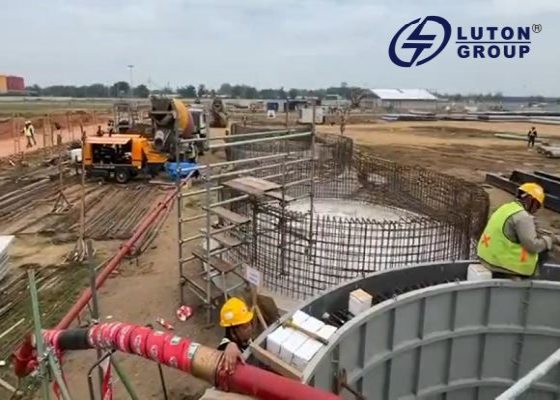

Step 1 Subbase Preparation and Structural Reinforcement
Commercial and high-volume pours demand deeper base preparation, thicker gravel layers, extensive rebar networks, embedded components, and complex structural supports.
Step 2 Logistics and Coordination Before the Pour
Coordination with the batching plant is essential – confirm mix design, slump requirements, transport intervals, and pumping needs. Pump trucks, crews, and deliver sequences must be scheduled precisely.
Step 3 Ready-Mix Delivery and Placement
Transit mixers arrive at preplanned intervals. Concrete is placed using line pumps or boom pumps based on site size, height, and access conditions. Continuous supply is maintained to ensure structural integrity.
Step 4 Compaction and Leveling
Large pours require multiple vibrators working simultaneously. Laser screeds or heavy-duty leveling machines are often used to achieve high accuracy and efficiency.
Step 5 Final Finishing and Early-stage Curing
Mechanical power trowels refine the surface. Curing begins immediately using methods such as water spraying, plastic sheeting, or curing compounds – selected based on temperature and humidity to support early strength development.
Concrete Pouring For Medium Projects
Medium-sized pours require a more structured workflow to maintain consistency and continuous placement.
- Mixing method: portable mixers or partial use of ready-mix
- Tools: vibrators, improved screeding tools, edge finishing tools
- Crew size: generally 3-6 persons
- Concrete source: ready-mix delivery is often preferred for stability
- Finishing approach: may involve mechanical tools for larger surfaces
Continuous pouring becomes increasingly important in this category, along with more precise leveling and vibration to avoid air pockets.

Step 1 Site Preparation and Reinforcement
Ground preparation becomes more rigorous, often involving gravel subbases, rebar frameworks, and reinforcing mesh to ensure sufficient load-bearing capacity.
Step 2 Formwork and Level Controls
Stronger and better-supported formwork is required. Levels, height markets, and reference points are used to maintain uniform elevation across the pour.
Step 3 Concrete Mixing or Ready-Mix Delivery
Medium-scale pours may combine on-site mixing with ready-mix supply. Because continuous placement is crucial, material scheduling must be planned in advance.
Step 4 Continuous Pouring
To avoid cold joints, concrete must be placed continuously. On-site teams coordinate spreading, vibration, and leveling in a seamless workflow.
Step 5 Vibration and Surface Finishing
Vibrators help eliminate trapped air and increase concrete density. Larger areas are leveled using long screeds or mechanical leveling tools.
How to Pour Concrete For Small Projects
Small-scale work is relatively straightforward and usually involves simple preparation and basic tools.
- Mixing methods: hand-mixed concrete or a small portable mixer
- Essential tools: wheelbarrow, shovel, screed board, finishing tools
- Crew size: typically 1-3 people
- Concrete source: bagged mix or small on-site batching
- Finishing approach: mainly manual troweling
These projects allow for slower-paced work and simple coordination, making them suitable for residential setting or light-duty applications.


Step 1 Ground Preparation
Clear the designated area, remove loose soil, and compact the base. A gravel or crushed stone layer may be added to improve drainage and overall slab stability.
Step 2 Formwork Setup
Install wooden or PVC formwork to define boundaries. Ensure accurate dimensions and leave space for expansion joints when necessary.
Step 3 Mixing the Concrete
Use bagged concrete or a simple site-made mix. Small-scale tasks typically rely on portable mixers or manual mixing tools to maintain consistent proportions.
Step 4 Pouring and Leveling
Place the mixed concrete into the formwork, spread it evenly, and use a screed board or straightedge for the initial leveling process.
Step 5 Consolidation and Finishing
Tap the sides of the forms or lightly vibrate the area to remove air pockets. Follow with troweling to refine the surface before beginning basic curing.
Concrete pouring varies significantly depending on project scale. From small residential slabs to large commercial foundations, the required equipment, mixing method, manpower, and on-site coordination all shift accordingly. Understanding these differences ensures a more efficient workflow and a more consistent, durable pour.
Recommended Equipment for Efficient Concrete Pouring
Selecting the right equipment is essential for maintaining productivity, ensuring consistent concrete quality, and achieving a smooth, durable finish. Whether the project involves small residential work or large commercial construction, the following tools significantly enhance the efficiency of the concrete pouring process.
Concrete Mixer or Portable Mixer
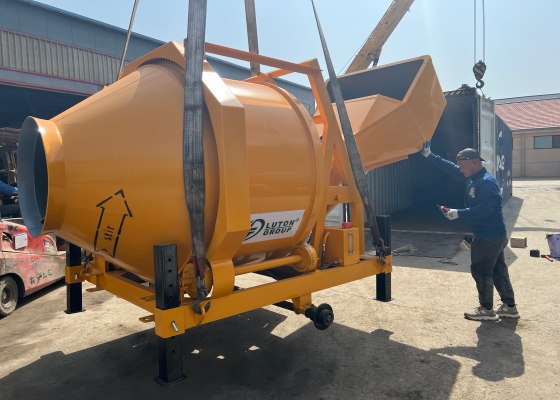
A concrete mixer – particularly a portable mixer – is fundamental for small to medium-sized projects where on-site batching is required.
Ensures uniform blending of cement, aggregates, and water.
Suitable for sites with limited access or low-volume production needs.
Helps maintain mix consistency and prevents segregation during preparation.
Portable concrete mixers are highly flexible and ideal for repair works, house slabs, small pathways, or remote areas where ready-mix delivery is not feasible.
| Model | JZC500-EW |
| Discharging Capacity | 500L |
| Loading Capacity | 800L |
| Productivity | 18-20 m³/h |
| Bags of Cement per Batch | 3 Bag Cement |
| Drum Thickness | 8mm |
| Mixing Motor Power | 2*5.5 kW |
| Max. Size of Aggregate | 80 mm |
| Voltage Standard | 380V, 50Hz, 3-Phase |
Self Loading Concrete Mixer
For construction teams that require continuous supply, faster cycle times, and reduced labor dependency, a self loading concrete mixer offers a major advantage.
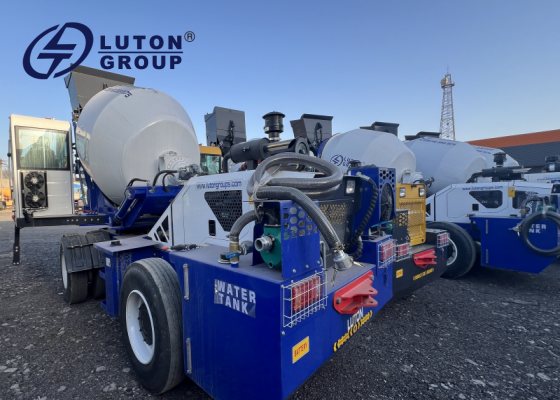
This machine integrates:
- Automatic weighing and batching
- On-board mixing drum
- Self-loading bucket
- All-terrain mobility
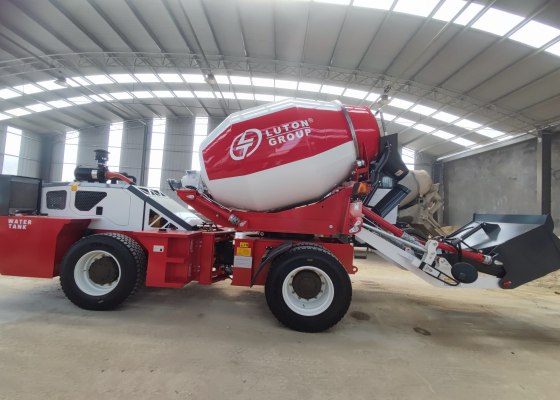
It functions as a four-in-one mobile batching plant, making it suitable for medium to large projects, highway work, rural infrastructure, and job sites without a fixed concrete supply. Consistent production and mobility ensure concrete is poured without delay.
| Models | LT-1.2 / LT-1.8 / LT-2.0 / LT-2.6 / LT-3.5 / LT-4.0 / LT-5.5 / LT-6.5 |
| Output Capacity | 4.8 ~ 26 m³/h |
| Engine Power | 58 ~ 110 kW |
| Gear | 4 forward 4 back |
| Oil Tank | 16 L |
| Water Supply | Time Relay |
Concrete Pumps: Line Pump and Boom Pump
A concrete pump becomes essential when concrete must be delivered over long distance, to elevated structures, or across obstacles.
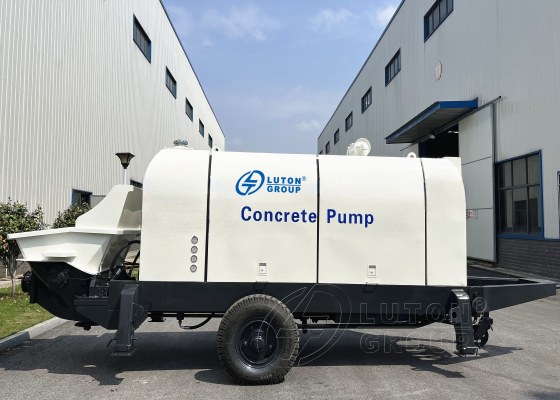
Line Pump
Concrete line pump is ideal for residential slabs, small foundations, or areas with limited access.
Capable of pumping concrete horizontally over significant distances.
| Model | HBTS30/HBTS40/HBTS50/HBTS60/HBTS80/HBTS90 |
| Max. Concrete Output (m³/h) | 30/40/50/60/80/90 |
| Max. Pumping Pressure (MPa) | 6/10/10/13/16/20 |
| Diesel Engine Power | 52 ~199 kW |
| Vertical Transportation | 100m ~ 300m |
| Horizontal Transportation | 300m ~ 1200m |
| Max. Aggregate Diameter | 40mm |
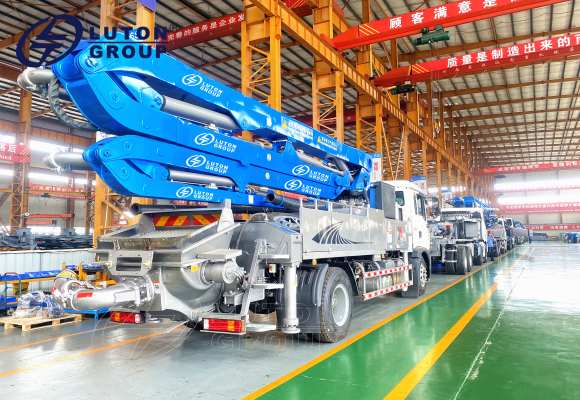
Boom Pump
Concrete boom pump is preferred for large pours, multi-story buildings, industrial floors, and high-reach areas.
Equipped with an articulated boom arm for fast, precise placement.
| Model | 30m ~ 61m |
| Boom Outrigger | 4Z/5RZ/6RZ/7R |
| Boom Vertical Height | 30m ~ 60.6m |
| Theoretical Pumping Capacity | 85 ~ 200 m³/h |
| Max. Pumping Pressure | 8.7 ~ 10 MPa |
| Min. Expanded Height | 7.1m/9.1m/7.7m/10.3m/10.6m/11m/15.8m |
| Inner Diameter of Conveying Cylinder | 230mm / 260mm |
| Turntable Rotation Angle | ±210° / ±360° |
Using the right pump minimizes manual handling, accelerates pouring speed, and ensures continuous flow – reducing the risk of cold joints and improving overall productivity.
These tools collectively contribute to stronger concrete and a cleaner, more professional final appearance.
Important Tips for Mixing and Pouring Concrete
Understanding how to mix and pouring concrete correctly is essential for achieving consistent strength and long-lasting performance. The following best practices apply to projects of all sizes, from small residential slabs to large commercial pours, ensuring the concrete maintains its designed properties throughout the mixing, placing, and curing stages.
Maintain the Correct Water-Cement Ratio
The water-cement ratio directly determines the concrete’s strength, density, and durability.
- Too much water increases workability but significantly reduces compressive strength and leads to excessive shrinkage.
- Too little water results in poor compaction and incomplete hydration.
For most applications, the mix should remain workable but not overly fluid. Strictly following the mix design – whether site-mixed or supplied as ready-mix – ensures consistent performance across the entire pour.


Consider Temperature and Weather Conditions
Environmental factors play a critical role during mixing and pouring:
- Hot water accelerates setting time, increases evaporation, and raise the risk of plastic cracking. Additional curing measures or retarders may be required.
- Cold weather slows hydration, delaying strength gain. Low-temperature pours often require insulated blankets or heated water in the mix.
- Wind and direct sunlight can pull moisture from the surface too quickly, making proper curing essential.
Monitoring site conditions helps determine the necessary adjustments to protect the concrete during its early hours.

Select the Right Equipment: Mixer or Self Loading Concrete Mixer
For small or decentralized sites, portable mixers are generally sufficient. However, when larger volumes or continuous supply is needed, a self loading concrete mixer becomes a highly efficient option, as it can handle raw materials, mixing, and transportation in one machine.
- Ensures consistent batching ratios.
- Reduces manual labor.
- Supports uninterrupted pouring in remote or medium-scale projects.
Using the appropriate mixing equipment greatly improves accuracy and uniformity.
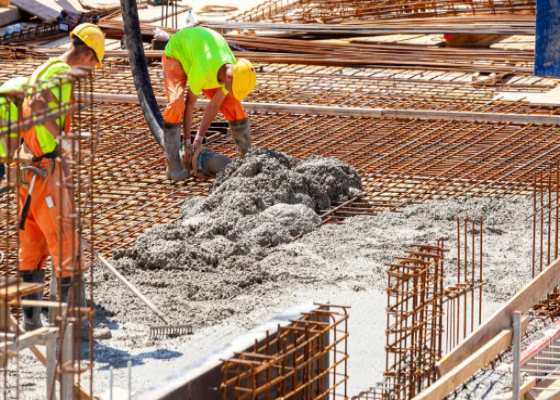
Choose Between Pumping and Manual Pouring
The method of placement should be determined by the project size, site conditions, and distance from the discharge point.
- Manual Pouring
Suitable for small areas where concrete can be easily transported with wheelbarrows or direct discharge from a mixer.
- Line Pump
Ideal for medium projects or locations with limited access. Capable of horizontal pumping across long distances.
- Boom Pump
Used in large-scale construction where height , reach, or sped is critical. Boom pumps deliver concrete efficiently across wide slabs, elevated decks, or multi-story structures.
Selecting the proper equipment ensures consistent placement, reduces labor intensity, and minimizes the risk of cold joints.


What Need Before Pouring Concrete
Before starting pouring concrete – whether it’s a small backyard slab or a large commercial foundation – the right materials, tools, and planning should be prepared.
Different project sizes require different levels of equipment and coordination, so here’s a simple breakdown to help you get fully prepared.
> Materials Needed
No matter how big or small the job is, the basic materials stay similar. But the way might change.
- Cement, sand, gravel or ready-mix concrete
Small jobs: bagged mix or on-site mixing
Medium jobs: portable mixer or partial ready-mix delivery
Large jobs: ready-mix from batching plant (recommended)
- Rebar, wire mesh, or steel reinforcement
This is aiming to prevent cracking and improves load capacity.
- Clean water
Prepare clean water to avoid muddy or contaminated water – it affects strength.
- Curing materials
Plastic sheets, curing blankets, or curing compound for surface protection.
> Tools & Equipment Needed
For Small/DIY Projects, simple tools are enough:
- Wheelbarrow or buckets
- Shovel and rake
- Screed board
- Float and trowel
- Small concrete mixer
For Medium Projects, more efficient and power tools are needed:
- Portable concrete mixer or small mobile mixer
- Vibrator ( to remove air pockets)
- Leveling tools
- Extra manpower for quicker placement
For Large or Commercial Projects, professional equipment becomes essential:
Ready-mix concrete trucks ( transit mixers)
- Concrete pump (line pump or boom pump)
- Concrete vibrator (internal/external)
- Laser screed or mechanical finishing tools
- Access planning for trucks and pump placement
For large pours, the goals is consistency and speed. Ready-mix concrete delivery from a batching plant ensures accurate proportions and continuous supply – something on-site mixing simply can’t achieve at big volumes.
> Choosing the Right Concrete Mixer
Small projects: Standard 25-30 MPa mixer is usually enough.
Driveways, foundations, structural slabs: 30-40MPa for better load-bearing performance.
Large commercial projects:
- Ready-mix with controlled slump
- Optional additives like plasticizers, retarders, or fiber reinforcement
- Mix design depending on project specs (temperature, pumpability, setting time)
If you’re pouring a large area, discuss slump, delivery timing, and mix adjustments with your batching plant in advance to avoid delays or cold joints.
Common Mistakes to Avoid When Pouring Concrete
Even with proper planning and the right tools, several common mistakes can compromise the quality, strength, and durability of a concrete pour. Understanding these issues in advance helps prevent structural defects and costly rework.
> Inadequate Subbase Preparation
A poorly compacted or uneven subbase is one of the most frequenct causes of cracking and settlement. Without a stable foundation, the slab loses long-term integrity. Proper compaction, drainage layers, and grading should never be overlooked, regardless of project size.
> Incorrect Water-to-Cement Ratio
Adding excess water to improve workability weakens the cured concrete. Too much water reduce compressive strength and increase shrinkage. Conversely, mixes that are too dry can result in poor consolidation. Ensuring the correct water-cement ratio is essential for achieving the specified performance.
> Delayed or Interrupted Pouring
Stopping the pour for too long leads to cold joints, surface inconsistencies, and weakened structural bonding. For medium and large projects, coordination with batching plants and pump operator is critical to maintain continuous placement.
> Insufficient Vibration or Consolidation
Failing to remove trapped air creates voids, honeycombing, and reduced strength. Using internal or surface vibrators appropriately ensures uniform density. Over-vibration, however, can cause aggregate segregation, particularly in high-slump mixes.
> Improper Formwork Installation
Weak or unstable formwork may shift or collapse under concrete pressure. Inaccurate elevations or misaligned forms leads to uneven surfaces and dimensional errors. Adequate bracing and pre-pour inspections are essential.
> Poor Surface Finishing Timing
Finishing too early traps bleed water beneath the surface, causing scaling and dusting. Finishing too late makes the surface difficult to smooth and may compromise durability. Monitoring surface conditions is key to determining the right moment for troweling.
> Neglecting Early-stage Curing
Improper curing is a major cause of cracking and premature surface deterioration. Allowing concrete to dry too fast – due to sun exposure, wind, or high temperatures – reduces strength and increases shrinkage. Using curing agents, water spraying, or coverings protects the slab during its critical early hours.
> Overloading the Slab Too Soon
Applying loads before the concrete reaches sufficient strength can cause cracking or permanent deformation. Construction plans should include a clear timeline for when foot traffic, equipment, or structural loads are permitted.
FAQ on How to Pour Concrete Correctly
> How thick should a concrete slab be?
The required thickness depends on the application.
- Walkways and patios: typically 7.5-10 cm (3-4 inches).
- Driveways: usually 10-15 cm (4-6 inches) to support vehicle loads.
- Structural or industrial slabs: may require 15 cm (6 inches) or more, depending on design loads and engineering specifications.
Reinforcement, subbase quality, and intended use all influence the final slab thickness.
> How long does concrete take to cure?
Concrete begins to set within hours, but full curing is a long-term process.
- Initial set: 4-8 hours, depending on temperature.
- Light foot traffic: usually 24-48 hours.
- Vehicle traffic: normally 7 days, once the concrete reaches sufficient early strength.
- Full design strength: achieved at approximately 28 days, which is the industry standard curing period.
Proper curing methods – such as covering, misting, or applying curing agents – are critical for achieving maximum durability.
> Can I pour concrete by myself?
Small projects like walkways, small slabs, or patios can be completed by individuals with basic tools and preparation. However:
- Medium projects may require additional labor for continuous placement and proper consolidation.
- Large pours involving foundations, driveways, or high-volume concrete typically require professional crews, pump trucks, and ready-mix coordination to avoid cold joints and quality issues.
The complexity of the pour should determine whether professional assistance is needed.
> Do I need rebar for every concrete project?
Not every pour requires rebar, but reinforcement is recommended whenever structural strength or load capacity is a concern.
- Light-duty slabs (patios, small walkways): wire mesh or fiber reinforcement may be sufficient.
- Driveways, foundations, and structural floors: rebar improves load distribution, reduces cracking, and enhances long-term performance.
- Large commercial slabs: often require engineered reinforcement layouts to meet design standards.
Choosing the correct type of reinforcement depends on slab thickness, soil conditions, and expected loading.
Get a Quote for Concrete Equipment
Reliable and efficient concrete equipment plays a decisive role in the success of every project. Whether the requirement involves a self loading concrete mixer, a concrete pump (line pump or boom pump), or a complete concrete batching plant, our team provides customized solutions to support smooth, continuous, and high-quality concrete production and pouring.
Request a free quote today, and get expert guidance on selecting the right equipment for your project size, budget, and construction needs.