Cement mortar is composed of cement, fine aggregate and water (cement, fine sand and water) according to the proportioning requirements. When cement mortar is used, some additives are often added, such as microfoaming agent, waterproof powder, etc., to improve its workability and viscosity.
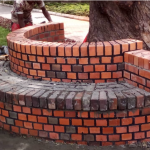
In construction projects, it is used for foundation and wall masonry, as a binder for block masonry materials, such as masonry, red brick, etc.. Also, it is used for indoor and outdoor plastering.
Generally speaking, 1:3 cement mortar is made of 1 weight of cement and 3 weights of sand. In fact, the composition of water is ignored. Generally, the ratio is about 0.65. That is, it should be 1:3:0.65. The density of cement mortar is 2000Kg/ m3.
The mortar used in the construction process is generally mixed on site for the convenience of construction. The cement mortar mix ratio of 1:3 refers to the volume ratio, and then converted into a weight ratio according to the capacity of the on-site mixer or material container; Mortar is mostly used finished mortar, and it is mostly expressed by mortar strength. According to the strength grades, cement mortar can be divided into: M5, M7.5, M10, M15, M20, M25, M30, etc.
Note: Mixed mortar is made up of cement, fine aggregate, lime and water, according to needs. The two are different concepts with different names and different uses.
Factors Affect The Strength Of Cement Mortar
- Cement
When the quality of raw materials is constant, the strength of mortar is related to the type (label) and amount of cement. - Sand and external additives
- Incorporation of mixed materials
- Masonry and maintenance conditions
- Mud and other impurities content
Properties of Cement Mortar
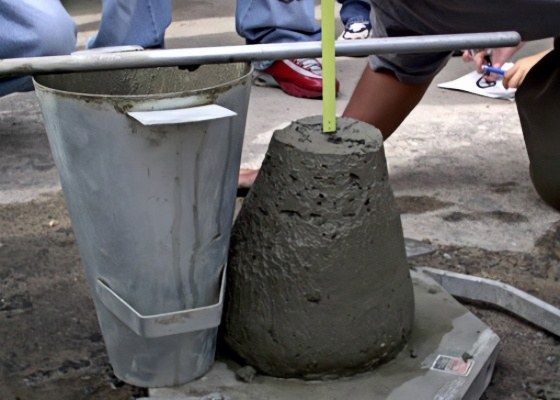
The workability of mortar refers to whether the mortar can be laid in a uniform and continuous thin layer on the surface of masonry and other surfaces, and the properties of which are closely bonded to the base layer, including fluidity and water retention.
Related Contents:
What Is Cement Mortar Used For In Construction
Cement mortar is primarily use as bonding, leveling, and finishing material in various stages of construction. Depending on the project scale and technical requirements, it plays a critical role in ensuring structural integrity, surface quality, and construction efficiency.
Masonry Work for Foundations and Walls
One of the most common applications of cement mortar is in masonry work, including brickwork and block masonry for foundations and load-bearing or partition walls. In these applications, mortar acts as a binding medium that distributes loads evenly and ensures stable alignment of masonry units.
Such work often requires continuous mortar supply and consistent mix quality, particularly on medium to large construction sites where masonry progresses rapidly and interruptions can affect structural accuracy and productivity.
Plastering and Rendering Applications
Cement mortar is widely used for both interior and exterior plastering, providing a smooth, protective surface over masonry or concrete substrates. The quality of plastering mortar directly influences surface flatness, adhesion strength, and long-term durability.
Plastering operations typically involve large-area, continuous application, which places higher demands on mortar workability, uniformity, and timely delivery to different working heights and locations on the job site.


Floor Screeding and Surface Leveling
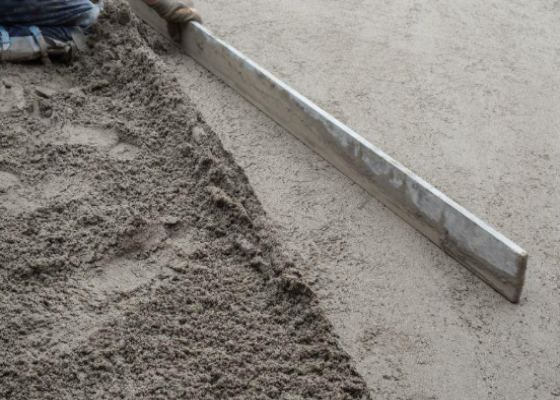
In floor screeding and leveling works, cement mortar is used to create even, load-bearing surfaces prior to finishing with tiles, coatings, or other floor, materials. These applications require precise control of mortar consistency and strength to prevent cracking, uneven settlement, or surface defects.
As screeding work often covers extensive floor areas within limited time frames, efficient mixing and stable material output become essential to maintain construction quality and progress.
From Application Requirements to Construction Efficiency
Across all these applications, cement mortar is rarely used in isolation. Its performance on site depends not only on material proportions, but also on how efficiently it is mixed, handled, and delivered during construction.
As project sized increase and labor cost rise, many contractors are moving away from purely manual mixing methods and seeking more reliable, mechanized solutions to ensure stable mortar quality and continuous supply – especially in projects with high productivity and consistency requirements.

Challenges of Cement Mortar Mixing on Construction Sites
Although cement mortar is widely used across various construction applications, its on-site production and handling present several practical challenges – especially as project scale, quality standards, and efficiency requirements continue to increase.
Inconsistent Mixing Quality
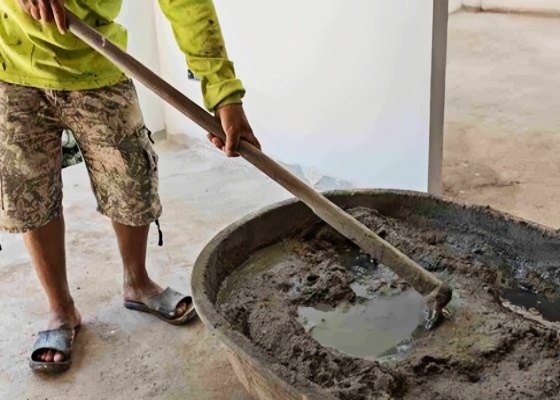
Manual mixing or small-capacity mixers often lead to inconsistent mortar quality. Variations in material proportioning, uneven mixing, and fluctuating water content can result in unstable strength, poor workability, and reduced bonding performance.
In applications such as masonry and plastering, even minor inconsistencies in mortar quality may affect alignment accuracy, surface finish, and long-term durability.
Difficulty Maintaining Accurate Mix Ratios
Cement mortar performance is highly sensitive to mix proportions. On many job sites, materials are still measured by volume using buckets or containers, which makes it difficult to maintain precise ratios – particularly when production needs to be continuous.
As construction progresses, cumulative errors in batching can lead to material waste, quality deviations, and increased rework.


Limited Productivity and Labor Dependency
Traditional on-site mortar mixing is labor-intensive and highly dependent on worker experience. As labor costs rise and skilled workers become harder to find, manual mixing methods often struggle to meet the productivity demands of modern construction schedules.
In medium to large projects, limited mixing capacity can quickly become a bottleneck, slowing down masonry, plastering, and screeding operations.
Material Handling and Delivery Constrains
Once mixed, cement mortar must be transported promptly to the point of application. On multi-story buildings or large job sites, manual handling significantly increases labor intensity and time consumption, while also raising the risk of segregation and loss of workability.
Ensuring timely and continuous mortar delivery to elevated or distant working areas remains a majot challenge for many contractors.

Quality Control and Waste Issues
Irregular mixing cycles, inconsistent batching, and delays in applicaton often lead to excess mortar hardening before use. This not only increases material waste, but also negatively affects site cleanliness and overall project cost control.
Without standardized mixing and delivey processes, maintaining stable mortar quality throughout the construction period becomes increasigly difficult.
The Need for More Efficient More Production Solutions
As construction projects become larger, faster-paced, and more quality-driven, these challenges highlight the limitations of traditional mortar mixing methods. Contractors are increasingly seeking solutions that can provide:
- Accurate and repeatable batching
- Uniform and reliable mixing quality
- Continuous material supply
- Reduced labor dependency
- Efficient on-site handling and placement
These requirements are driving the adoption of modern, mechanized equipment designed to improve mortar production effiiency and consistency across different construction scenarios.
How Modern Construction Equipment Improves Cement Mortar Production
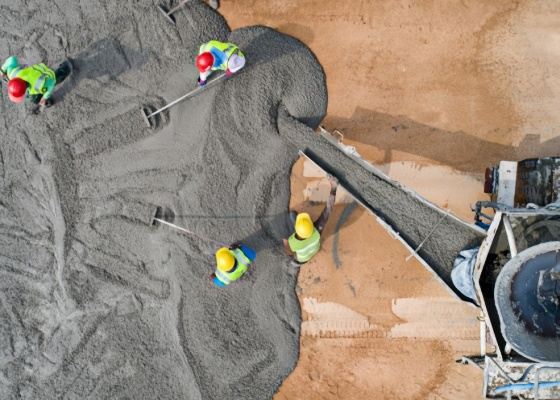
Modern construction equipment has fundamentally changed the way cement mortar is produced and applied on job sites. By replacing manual operations with mechanized and standardized processes, these systems significantly improve mortar quality, productivity, and overall construction efficiency.
Accurate Batching and Proportion Control
One of the primary advantages of mechanized equipment is the ability to control material proportions accurately. Automated or semi-automated batching system ensure that cement, sand, water and additives are measured consistently according to predenfined mix designs.
This level of accurately helps maitains stable mortar strength and workability throughout the construction process, reducing quality fluctuations caused by manual measurement errors.
Uniform and Continous Mixing Quality
Unlike intermittent manual mixing, modern mixing equipment provides uniform and continuous mixing action. This ensures that cement particles are evenly distributed and fully hydrated, resulting in mortar with consistent texture, fluidity, and bonding performance.
Continuous mixing capability is particularly important in masonry, plastering, and screeding operations where uninterrupted material supply directly affects construction progress and surface quality.


Improved Productivity and Reduced Labor Dependency
Mechanized mortar production significantly reduces reliance on manual labor. Fewer workers are required for material loading, mixing, and handling, allowing contractors to allocate labor resources more efficiently.
At the same time, higher output capacity enables equipment-based systems to meet the demands of medium to large-scale projects without becoming a production bottleneck.
Efficient On-site Handlng and Material Delivery
Modern construction equipment often integrates mixing and material delivery functions. Mortar can be transported directly from the mixing unit to the point of applicatoin, minimizing handling steps and reducing the risk of segregation or workability loss.
This is especially beneficial on multi-story buildings or large construction sites, where efficient vertical and horizontal material transport is critical.

Better Quality Control and Cost Management
Standardized mixing cycles and controlled production processes help improve overall quality control. Consistent mortar quality reduces rework, minimizes material waste, and leads to more predicable construction outcomes.
From a cost perspective, improved efficiency, lower labor requirements, and reduced waste contribute to better project cost management and profitability.
From Equipment Capability to Practical Solutions
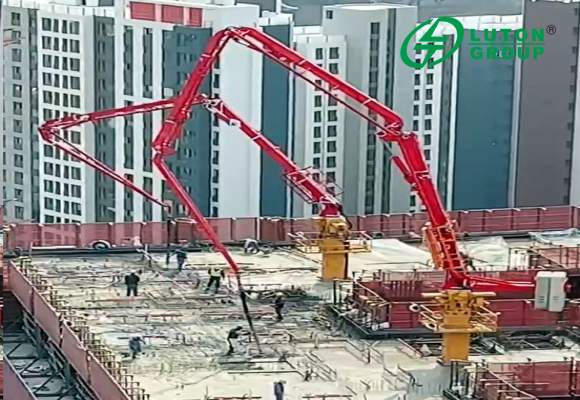
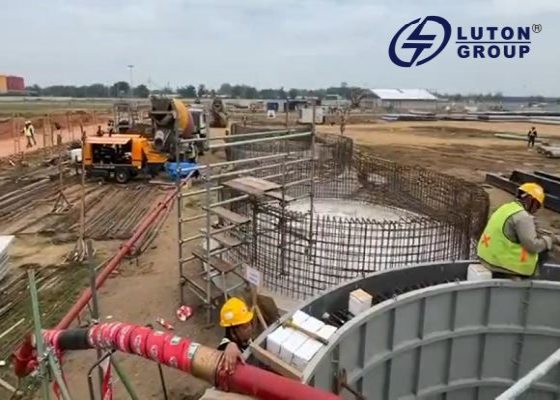
While the principles of mechanized mortar production are universal, different construction scenarios require different types of equipment. Project scale, site conditions, mobility requirements, and material demand all influence the most suitable solution.
In practice, contractors choose from a range of equipment options – from centralized mixing systems to middle, on-site mixing units – depending on their specific mortar productoin and placement needs.
Equipment Solutions for Cement Mortar Applications
Different construction projects require different cement mortar production methods. While small-scale works may rely on on-site mixing, modern construction increasingly favors industrialized and standardized mortar production, especially in projects with strict quality control and large material demand.
Dry Mortar Plant for Industrial Cement Mortar Production
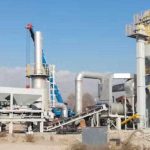
Dry mortar plans are the primary equipment used for large-scale and standardized cement mortar production. These systems produce pre-mixed dry mortar by precisely batching and mixing cement, sand, fillers and additives in a controlled factory environment.
The main advantages of dry mortar plants include:
- Accurate and repeatable material proportioning
- Uniform mixing quality and stable product performance
- Reduced influence of on-site labor and environmental conditions
- Convenient packaging or bulk delivery for transportation and storage
Dry mortar produced by these plants can be transported to construction sites in bags or soils and mixed with water before use, ensuring consistent mortar quality across multiple projects and job locations.

Dry mortar plants are widely used in large residential developments, commercial buildings, infrastructure projects, and ready-mix mortar supply businesses where cement mortar quality and production efficiency are critical.
Specifications of LUTON 10t/h Dry Mortar Plant
| Item | Specification | Description |
| Feed hopper | 1800*1800mm | Storage of Wet Sand |
| Variable Frequency Belt Conveyor | B500*1500mm | |
| Reducer | XWD7-23-7.5 3kW | |
| Wet San Belt Conveyor | B500*7000mm 4kW electric motor | Transport the wet sand to the drying chamber |
| Diesel Burning Machine | TBG85P | Heat source system, providing heat to dry wet sand |
| Feeder Diameter | Φ325mm | |
| Triple Return Dryer | SHG6210 | Drying, mixing and conveying the materials |
| Cylinder Size | Φ 2000 * 4000mm | |
| Electric Motor | 7.5kW | |
| Vibration Grading Screen | 2500*1200*1500mm0.374kW | Secondary screening on the dried materials |
| Plate Chain Hoist (16m) | NE15 | Lift the sand to the material storage bin |
| Conveying Capacity | 15-20m3/h | |
| Electric Motor | 5.5kW | |
| Reducer | XWD5—29—5.5 | |
| Materials Silos | Full Volume: 40m3 Cylinder Plate Thickness: δ=4mm or 5mmCone Plate Thickness: δ=6mm Silo Diameter: φ=3000mm Supporting Legs : φ=219mm | Store the materials for mixing |
| Screw Conveyors | LSY219 electric motor 7.5kW | Conveying raw materials into the batching hopper |
| Batcher Machine | Hopper volume: 2m3Tension Sensors: STLScrew conveyor: LSY219Motor: 7.5kW Reducer: LSY-230-5.75 | Materials Batching |
| Bucket Elevator | Conveying Capacity: 15-20 m3/h Motor: 5.5kW Dust Removal Machine: 12 bags, 3kW | Hoist the measured material to the mixer |
| Pre-Mix bin | Volume :2 cm3 Pneumatic Valve: DN300 Dust Collecting Machine: 5 bags | The mixing bin is a pneumatic large door type, which can quickly put the mixed materials into the mixer |
Concete Batching Plants for Wet Mortar and Multi-material Production
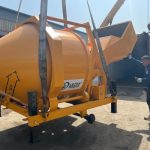
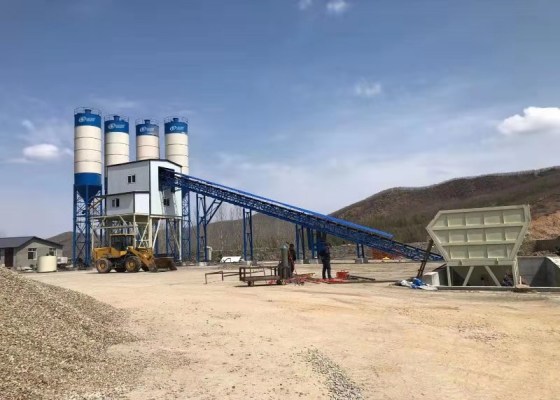
While dry mortar plants focus on factory-based dry mixing, concrete batching plants are often used for wet mortar production directly at or near construction sites. These plants are suitable for projects that require both cement mortar and concrete, offering high output and flexible mix design capability.
Concrete batching plants provide:
- High-capacity mixing for continuous mortar supply
- Accurate batching for cement-based materials
- Integration with concrete production for multi-purpose use
They are commonly applied in large construction projects where mortar is consumed in significant volumes and immediate use is required.

| Model | HZS60 | HZS90 | HZS120 | HZS180 |
| Capacity | 60m3/h | 90m3/h | 120m3/h | 180m3/h |
| Mixing system | Twin-shaft concrete mixer | |||
| Discharging height | 3900mm | 3900mm | 3900mm | 4000mm |
| After-sale service | Erection & commissioning, operator training | |||
| Warranty | 12 months after erection | |||
| Concrete mixer | JS1000 | JS1500 | JS2000 | JS3000 |
| Discharging volume | 1000L | 1500L | 2000L | 3000L |
| Mixing cycle | 60S | 60s | 60s | 60s |
| Max. mixing size | 100/80mm | 100/80mm | 100/80mm | 120/80mm |
| Aggregate batching machine | PLD1600 | PLD2400 | PLD3200 | PLD4800 |
| Storage bins quantity | 2 or 3 or 4 sorts | 3 or 4 sorts | 3 or 4 or 5 or 6 sorts | 3 or 4 or 5 or 6 sorts |
| Aggregate feeding to mixer by | Belt conveyor | |||
Concrete Mixer Pumps for On-site Mixing and Placement
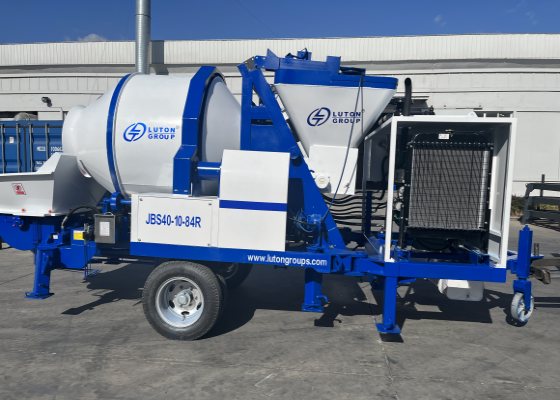
Concrete mixer pumps combine mixing and pumping functions in a single unit, making them suitable for on-site cement mortar production and delivery. These pumping machines allow mortar to be mixed and pumped directly to the application area, improving efficiency and reducing manual handling.
They are particularly effective in:
- Multi-story building construction
- Masonry and plastering works requiring vertical delivery
- Projects with limited space for centralized mixing equipment
| Models | HBTS/JBS Series |
| Concrete Output Capacity | 30 ~ 90 m³/h |
| Pumping Pressure | 6 ~ 20 MPa |
| Engine Power | Diesel / Electric 52 ~ 199kW |
| Max. Transportation (V/H) | 300m/1200m |
| Distribution Type | S valve |


Self Loading Concrete Mixers for Flexible and Mobile Job Sites
Self loading concrete mixers offer a highly mobile solution for cement mortar production, especially in remote or scattered job sites. These machines integrate material loading, mixing, and transportation into one unit, reducing reliance on additional equipment.
Although primarily designed for concrete, self loading mixers are also capable of producing cement mortar for small to medium-scale construction works where flexibility and mobility are essential.

| Model | Drum Capacity (m³) | Output Capacity (m³) | Engine Power (kW) | Drive Mode | Max Speed (km/h) |
| LT-1.2 | 1.2 | 4.8 | 58 | 4×4 off-road | 25 |
| LT-2.0 | 2.0 | 8 | 78 | 4×4 off-road | 25 |
| LT-3.5 | 3.5 | 14 | 85 | 4×4 off-road | 25 |
| LT-4.0 | 4.0 | 16 | 91 | 4×4 off-road | 28 |
| LT-5.5 | 5.5 | 22 | 92-110 | 4×4 off-road | 30 |
| LT-6.5 | 6.5 | 26 | 92-110 | 4×4 off-road | 30 |
Integrated Equipment Selection Based on Project Needs
In practice, contractors and material suppliers often select equipment based on project scale, production method, and logistical requirements:
- Dry mortar plants for standardized, factory-based cement mortar production
- Concrete batching plants for high-volume, on-site wet mortar and concrete
- Mixer pumps for combined mixing and delivery
- Self loading mixers for mobile and flexible operations
By choosing the right equipment solution, construction teams can achieve better mortar quality, higher productivity, and improved cost control across different cement mortar applications.
From Cement Mortar Knowledge to Practical Construction Solutions
Cement mortar is essential for masonry, plastering, leveling, and repair works. Achieving consistent quality on construction sites requires precise mixing, accurate batching, and efficient delivery. Traditional manual methods often fall short in meeting modern productivity and quality demands. Modern equipment – such as dry mortar plants, concrete batching plants, mixer pumps, and self loading mixers – provides practical solutions for projects of any scale. Choosing the right equipment improves mortar quality, reduces labor, and enhances efficiency. Contact us to explore the most suitable cement mortar production solutions for your project.