Electric cement mixer has become one of the most essential tools for modern small-to-medium construction projects, home renovations, and DIY concrete work. Compared with gasoline-driven mixers, an electric cement mixer offers cleaner operation, lower noise, reduced maintenance, and higher cost efficiency. It’s the preferred choice for contractors and homeowners around the world.

With capacities ranging from 120L to 750L, electric cement mixers are designed to handle concrete, mortar, plaster, and dry mix materials with ease. Whether you are building a small foundation, repairing a driveway, or completing household construction tasks, an electric cement mixer delivers stable mixing performance and keeps the workflows fast, clean, and consistent.
What Is an Electric Cement Mixer
An electric cement mixer is a compact, motor-driven machine designed to efficiently combine cement, sand, aggregate, and water into uniform concrete or mortar. Unlike fuel-powered mixers, it uses an electric motor as the power source, providing stable torque, quieter operation, and zero exhaust emissions. This makes it highly suitable for indoor construction, urban job sites, residential projects, farms, and DIY applications where clean and convenient mixing is required.
Most electric cement mixers features a rotating drum, steeling mixing blades, and a tilting mechanism for easy discharge. There are also horizontal twin-shaft mixers and vertical planetary mixers, especially for accurate ratios, evenly mixing and stable qualities of large-scale construction projects. All these mixeres capacities range from 120L tp 750L, and 500L to 1000L+, covering the needs of both beginners and professional contractors. Thanks to the simple structue and plug-and-play operation, electric cement mixer is one of the most user-friendly concrete mixing solutions available in the construction equipment market today.

How Does an Electric Cement Mixer Work
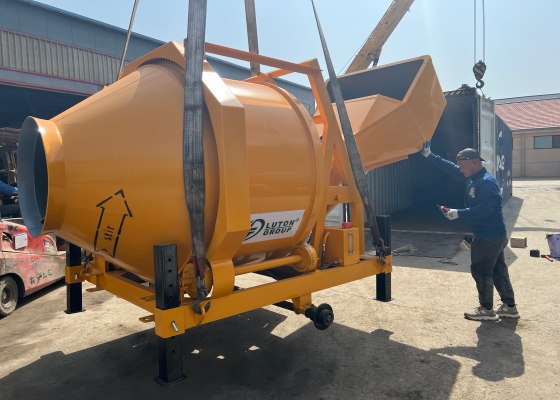
An electric cement mixer operates through a simple yet highly efficient mechanism powered by an electric motor. Once the motor is switched on, it drives the mixing drum (or the mixing shafts) through a belt or gear system, causing the drum (or the mixing shafts) to rotate at a steady speed. As cement, sand, aggregate, and water are added, the internal mixing blades lift and tumble the materials repeatedly, ensuring a consistent and homogeneous mixture.
The process typically involves three steps:
- Loading the materials – Users add dry mix first, followed by water, depending on the required concrete ratio.
- Mixing inside the rotating drum or the mixer host – The motor maintains stable RPM, allowing the blades to break, fold, and blend materials thoroughly.
- Discharging the mixture – The user tilts the drum using a handwheel or lever or button to pour out the finished mixture smoothly.
Because the machine is electrically powered, it offers instant start-up, steady performance, and minimal maintenance compared with gasoline or diesel engines. This reliability is one of the main reasons electric cement mixers are widely adopted across construction and home improvement projects.


Types of Electric Cement Mixers
Electric cement mixers come in several designs and capacities to meet different construction needs, from small DIY repairs to professional concrete mixing task. Understanding these types helps users choose the most suitable model for their projects.
Small Electric Cement Mixer

Smaller models offer excellent maneuverability and are perfect for indoor or narrow job sites. These mixers typically have compact drums but still provide stable motor performance, making them great for DIY users and small contractors.
| Models | CM120H/140H/160H/180H/230H/260H |
| Drum Capacity (L) | 120/140/160/180/230/260 |
| Motor Power (W) | 550/600/800/900/1000/1050 |
| Voltage (V) | 110/220/230/240 |
Portable Electric Cement Mixer

This is the most common type, designed with lightweight frames and durable wheels for easy transporation. Capacity ranges from 350L to 750L, ideal for home renovatons, fence buildng, paving and small construction jobs.
| Models | CM350-700, JZC/JZM350-750 |
| Drum Capacity (L) | 350/400/500/700/750 |
| Motor Power (kW) | 3/5.5/5.5*2/7.5*2 |
| Voltage (V) | 110/220/230/240 |
Twin Shaft Concrete Mixer
Twin shaft concrete mixer is a heavy-duty machine widely used in commercial batching plants and large construction projects. Commonly Capacity ranges from 500L to 1000L.(There are also more larger sizes, 2000L, 3000L, even 4000L).
| Models | JS500/750/1000 |
| Drum Capacity (L) | 500/750/1000 |
| Motor Power (kW) | 18.5/30/37 |
| Voltage (V) | 110/220/230/240 |
Planetary Cement Mixer

Planetary cement mixer is a high-efficiency mixing machine designed with a unique planetary motion. It is widely used in precast concrete plants, block/brick production, ceramic and refractory materials, and other applications that requires superior mixing quality and precise control.
| Models | MP500/750/1000 |
| Drum Capacity (L) | 500/750/1000 |
| Motor Power (kW) | 18.5/30/37 |
| Voltage (V) | 110/220/230/240 |
Key Features & Specifications of Electric Concrete Mixer
A high-quality electric mixer is defined by its performance, durabiity, and ease of operation. While different models vary in capacity and design, most mixers share several core features and technical specifications that directly impact mixing efficiency and job-site productivity.
Motor Power & Voltage
Electric cement mixers typically come with:
- Motor power: 500W- 37kW
- Volage options: 110V/120V for North American, 220V/240V for Europe, Asiz, Africa and Middle East

A strong motor ensures stable drum rotation and prevents stalling under heavy loads.
Mixing Capacity
Common drum sizes includes:
- 120L/140L for home DIY and small projects
- 160L/230L for light-to-medium construction
- 260L/350L/400L for professional job sites
- 500L/700L/750L/1000L+ for concrete mixing plant or other large volume and precise concrete producing sites
The right capacity depends on mixing volume and project frequency.
Mixer Drum Material & Thickness
Reinforced steel drums for heavy-duty mixing
Poly drum options for lightweight, rust-free applications
Steel drums often come with thickened wall s to withstand abrasion from sand and gravel.

Mixing Blades Structure
High-quality mixers usually include:
- Welded steel blades
- Optimized blade angels for better lifting and folding action
This ensure consistent and uniform concrete mixing.
Safety & Convenience Features
- Thermal motor protection
- Sturdy frame with wide support base
- Large pneumatic or solid wheels
- Easy-tilt handwheel for discharging
- Waterproof switch for safer indoor/outdoor use
With these specifications in mind, buyers can easily compare models and select a mixer that matches their mixing needs, usage frequency, and budget.
Advantages of Using an Electric Cement Mixer
Choosing an electric cement mixer brings multiple advantages for both professional contractors and DIY users. Its clean operation, stable performance, and low running cost make it one of the most practical machines for small to medium concrete applications.
Energy-saving & Cost-effective
Electric cement mixers consume far less energy than gasoline/diesel engines and require no fuel.
- Zero gasoline/diesel cost
- Extremely low daily operating expenses
- Long motor lifespan with minimal maintenance
This makes them the most economical choice for long-term use.
Quiet & Eco-friendly Operation
Electric motors generate very low nois compared to gas-powered or diesel-drived mixers and produce zero emissions.
This allos for use in:
- Indoor construction
- Residential areas
- Urban renovation projects
- Noise-sensitive job sites

Easy to Operate
Electric cement mixers feature:
- Plug-and-play operation
- Simple controls
- Easy discharging
- Smooth and steady mixing
Even first-time users can operate the machine without difficulty.
Stable Mixing Performance
Thanks to the constant RPM of electric motors, the mixture stays:
- Consistent
- Uniform
- Free from clumps
This leads to higher quality concrete and better bonding strength.
Lightweight & Highly Portable
Most electric cement mixers come with durable wheels and compact frames, maing them easy to move around construction sites.
Lower Maintenance Requirements
There’s no carburetor cleaning, engine oil change, or fuel system repair.
Routine care is limited to:
- Cleaning the mixing drum
- Checking bolts
- Inspecting the belt ( if equipped )
This dramatically reduces downtime and extends machine lifespan.
Electric Cement Mixer Applications
An electric cement mixer is suitable for a wide range of construction and home improvement tasks due to its clean power source, stable performance, and versatile mixing capability. Whether for professional job sits or backyard project, it consistently delivers a reliable concrete mix.
Home Renovation & DIY Projects
Electric cement mixers are extremely popular among homeowners and DIY builders. Typical uses includes:
- Building small foundations and floors
- Repairing driveways and walkways
- Creating patios, garden paths, and outdoor slabs
- Fence post installation
- Mixing mortar for brickwork and tiling

Residential & Small Commercial Construction
For small contractors, an electric cement mixer provides sufficient capacity and stable rotation for repetitive daily mixing tasks, such as:
- House extensions
- Interior wall construction
- Small concrete slabs
- Sidewalk repairs
- Staircase casting
Landscaping & Agricultural Projects
Its lightweight and easy mobility make it ideal for farms and gardens:
- Mixing soil-cement for landscaping
- Preparing concrete for farm sheds and animal enclosures
- Repairing farm roads
- Making water trough bases and fence foundations

Indoor Construction & Urban Projects
Because it produces no exhaust emissions, an electric cement mixer can safety operate in:
- Indoor renovation areas
- Basements
- Enclosed workshops
- Urban job sites with strict environmental regulations
Professional Trades & Small Workshops
Electric mixers are commonly used by:
- Masonry teams
- Small contractors
- Construction rental shops
- Prefab and repair workshops
Its simplicity and low maintenance cost make it a practical tool for frequent daily use.
How to Choose the Right Electric Cement Mixer
Selecting the best electric cement mixer depends on your project requirements, workload frequency, and job-site environment. The following factors will help you evaluate different models and make a smart purchasing decision.
Determine the Required Drum Capacity
The right size directly affects productivity:
- 120L-160L: DIY, home renovation, small batches
- 200-260L: Light commercial work
- 350-400L+: Professional contractors, continuous mixing
Choose a drum size that matches the scale of your daily tasks.

Check Motor Power & Voltage Compatibility
For stable and efficient mixing:
- Motor power should be matched with drum capacity
- Areas like the US require 110V/120V mixers
- Most other regions use 220V/240V
Higher power ensures smoother drum rotation under heavy load.
Consider Drum Material & Durability
- Steel drums: Stronger, more durable, suitable for gravel and heavy-duty use
- Polyethylene drums: Lighter, rust-free, easier to clean
Professionals typically prefer steel drums for longevity.
Evaluate Drive System
- Belt-drive: Quieter, easier to maintain, budget-friendly
- Direct-drive: Higher efficiency, fewer wearable parts
Your choice depends on maintenance preference and workload intensity.
Check Frame Strength & Mobility
A good electric cement mixer should have:
- Wide, stable frame
- Large rubber or pneumatic wheels
- Easy handwheel for drum tilting
This ensures safety and smooth operation on uneven ground.
Look at Safety Features
Essential safety components include:
- Thermal overload protection
- Waterproof ON/OFF switch
- Protective motor housing
- Sturdy drum locking mechanism
Assess After–Sales Support
A reliable support should provide:
- Spare parts availability
- Direct factory support
- 1-3 years warranty
- Technical consultation for project needs
Selecting the right electric cement mixer ensures better performance, longer machine life, and reduced downtime on the job site.
LUTON Electric Cement Mixer for Sale
As a professional construction machinery manufacturer, we provide a full range of electric cement mixers for sale designed for durability, stable performance, and long service life. Whether you are a contractor, distributor, or DIY user, our mixers deliver reliable mixing efficiency at competitive factory-direct prices.
Full Capacity Range
We supply multiple drum sizes to meet different project needs:
- 120L/140L/160L – Portable and ideal for home renovation
- 180L/200L/260L – Perfect for small contractors
- 300L/350L/400L+ – Heavy-duty models for commercial job sites

High-performance Motors
Our mixers use copper-wound motors with:
- Strong starting torque
- Stable RPM under heavy load
- Thermal overload protection
- Optional 110V/120V or 220V/240V voltage
This ensures consistent mixing even in demanding conditions.
Reinforced Drum & Blade Design
- Thickened steel drum for long-term abrasion resistance
- Optimized mixing blades for uniform material lifting and folding
- Smooth inner wall for faster cleaning
Heavy-Duty Frame for Job-site Durability
- Sturdy steel structure
- Wide support base
- Anti-tip stability
- Pneumatic or solid rubber wheels for easy movement
Easy Operation & Low Maintenance

- Simple ON/OFF switch
- Easy-tilt hand wheel for fast discharge
- Removable drum ( optional models)
- Minimal daily maintenance required
Custom Options Available
We support OEM/ODM customization:
- Color, logo, and labeling
- Motor specifications
- Drum thickness
- Wheel type
- Packaging style (carton/pallet/steel frame)
Ideal for Distributors & Contractors
Our electric cement mixers are popular in:
- Europe
- North America
- Southeast Asia
- Africa
- South America
With competitive pricing and stable performance, they are widely used for retail, rental, and construction supply markets.
Maintenance & Safety Tips of Electric Concrete Mixers
Proper maintenance and safe operation are essential to extend the service life of your electric cement mixer and keep job-site performance stable. With just a few simple steps, users can ensure long-term reliability and avoid unnecessary breakdowns.
Routine Maintenance Tips
- Clean the Drum After Every Use
Leftover concrete hardens quickly. Rinse the drum with water and rotate it briefly to remove residue. For stubborn material, add gravel and water, then run the mixer for a few minutes.

- Check the Belt or Drive System
For belt-drive mixers, inspect belt tension and wear regularly. Replace worn belts immediately to avoid slippage and reduced mixing speed.
- Lubricate Moving Parts
Apply lubrication to bearings, pivot points, and wheels according to the manufacturer’s instructions. This ensures smooth rotation and minimizes friction.
- Inspect Bolts & Fasteners
Vibration may loosen bolts over time. Tighten frame bolts, motor mounts, and drum locks periodically.
- Protect the Motor
Keep the motor housing dry and clean. Avoid operating the mixer in heavy rain unless it has a waterproof motor cover.
Safety Tips for Daily Operation
- Use the Mixer on Stable, Level Ground
This prevents tipping and ensures safe drum rotation.
- Follow Correct Mixing Sequence
Add gravel or dry mix first, and pour water slowly. Overloading the drum can strain the motor and reduce service life.
- Keep Hands Clear of Moving Parts

Never reach inside the drum while it is running. Use the proper tool for material adjustment.
- Wear Protective Gear
Use gloves, goggles, and work boots to avoid injury from splashing concrete and moving components.
- Disconnect Power Before Maintenance
Always unplug the electric cement mixer before cleaning, lubrication, or part replacement.
- Avoid Extension Cord Overuse
If extension cords are necessary, use heavy-duty, outdoor-rated cables to prevent overheating or voltage drop.
By following these maintenance and safety guidelines, users can significantly prolong the lifespan of their electric cement mixer, reduce downtime, and ensure smooth, trouble-free mixing on any project.
FAQs About Electric Concrete Mixers
What size electric cement mixer do I need?
For small DIY projects, a 120L-160L mixer is generally sufficient.
For contractors or frequent use, a 200L-350L mixer provides better efficiency and higher output.
Large-scale commercial tasks may require 400L+ heavy-duty models.
Can an electric cement mixer run on household power?
Yes. Most models operate on standard household voltage:
- 110V/120V for North America
- 220V/240V for Europe, Asia, Africa, and South America
This makes electric cement mixers convenient for both indoor and outdoor use.
Can I use an electric cement mixer for mortar or plaster?
Absolutely. Electric cement mixers are suitable for:
- Concrete
- Mortar
- Plaster
- Cement-based coatings
- Dry mix materials
Just avoid overloading the drum with excessively stiff mixers.
Is an electric cement mixer better than a gasoline mixer?
For small and medium projects – yes.
Electric mixers offer:
- Lower operating cost
- Quiet performance
- No exhaust fumes
- Easy start-up
- Minimal maintenance
Gasoline mixers are only preferable when power supply is unavailable.
How long does concrete take to mix?
Typically 3-5 minutes depending on mix ratio and drum size.
Avoiding mixing too long to prevent premature setting and moisture loss.
How much material can a cement mixer hold?
Capacity varies:
- Small mixers: 1-1.5 bags of pre-mix
- Medium mixers: 2-3 bags
- Large mixers: 4-6 bags or more
Always follow the manufacturer’s recommended load limit.
Do electric cement mixers require a lot of maintenance?
No. They require:
- Regular cleaning
- Belt inspection ( if belt-driven)
- Occasional lubrication
- Tightening bolts
Compared with fuel-powered mixers, maintenance is much easier.
Can I operate an electric cement mixer indoors?
Yes. As long as ventilation is adequate and safety precautions are followed: Electric mixers produce no fumes, making them ideal for:
- Basements
- Workshops
- Indoor renovations
Get a Quote for Your Electric Concrete Mixer
Looking for a reliable electric cement mixer for your project or business? Whether you need a compact 120L model for DIY work or a heavy-duty 350L mixer for commercial construction, we offer high-performance machines at competitive factory-direct prices.
Our team provides:
- Free consultation & model selection
- Detailed specifications and videos
- OEM/ODM customization
- Fast delivery to your country
- 1 year warranty support
Get your best price today – request a free quote now!
Simply contact our sales team or fill out the inquiry form below. We will reply within 12 hours with full specifications, latest prices, and shipping details.