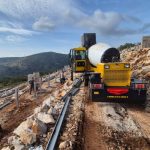
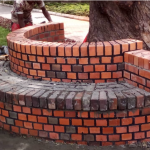
Hydraulic block making machine is the leading choice for manufacturers who demand stronger, denser, and more durable concrete blocks. Unlike conventional vibration-only block machines, hydraulic systems apply high-pressure compaction, ensuring that each block is formed with exceptional density and unifrom strength. This results in premium-quality blocks that perform better in load-bearing structures, pavements, and long-term construction projects.

With global construction standards rising, builders and contractors increasingly seek concrete blocks with higher compressive strength, lower breakage rates, and better dimensional accuracy. Hydraulic block machines meet these demands by combining hydraulic pressure, vibration technology, and precision mold design, making them ideal for both small block factories and large commercial production lines.
Whether you are producing hollow blocks, solid blocks, paving blocks, or interlocking bricks, a hydraulic block making machine provides the reliability, efficiency, and product consistency needed to stay competitive in today’s concrete block market.
How A Hydraulic Block Making Machine Works
A hydraulic block making machine uses high-pressure hydraulic force combined with vibration to shape raw materials into strong, high-density concrete blocks. The working process is simple but highly effective:
Raw Materials Are Fed Into the Machine
Cement, sand, stone aggregates, and sometimes fly ash are loaded into the mixer and then transported into the block machine’s feeding hopper.
Hydraulic System Generates High Pressure
A hydraulic oil pump powers one or more large oil cylinders. When activated, these cylinders push the upper mold downward with tons of pressure, far higher than what vibration-only machines can achieve.
Vibration + Pressure Compact the Machine
During molding, the machine applies strong hydraulic pressure and high-frequency vibration. This dual compaction process removes air pocket and compresses the mixture tightly into the mold.
Blocks Form With High Density And Accurate Shape
Because the pressure is evenly applied, the final blocks have:
- Higher compressive strength
- Smoother surfaces
- Better dimensional accuracy
- Lower cracking rate during curing
Finished Blocks Are Ejected for Curing
Once shaped, the machine lifts the mold, and the newly formed blocks are automatically ejected onto pallets.
They are then moved to curning areas for steaming or natural drying.
Types of Hydraulic Block Making Machines
Hydraulic block making machines come in several configurations, designed for different production scales and block types. Below are the most common categories and their key featutres.
Fully Automatic Hydraulic Block Making Machine
A complete production line controlled by PLC.
- Automatic feeding, molding, palletizing
- High output and stable performance
- Ideal for large block factories or commercial requirements

| Model | LT-HF400 |
| Max Pressure | 4000kN |
| Rated Pressure | 3300kN |
| Max. Pressure of Hydraulic System | 31.5MPa |
| Rated Pressure | ≤25MPa |
| Hydraulic Valve | Calyca, Taiwan Province of China |
| Control System | PLC |
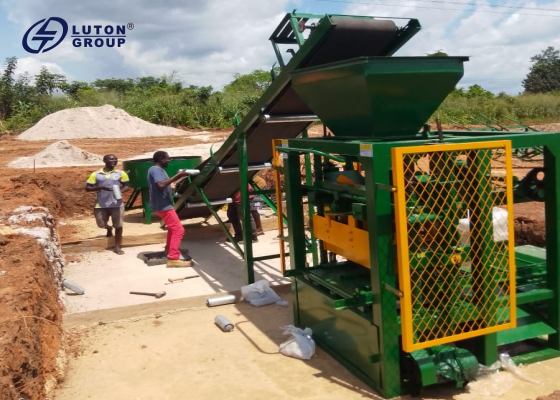
Semi Automatic Hydraulic Block Making Machine
By semi-automatic hydraulic brick machine, operators handle feeding or pallet collection manually.
- Lower investment cost
- Easy to operate and maintain
- Suitable for medium-scale manufacturers
| Model | LT-QT 4-24 |
| Host Machine Power | 22kW |
| Vibration Force | 35.5kN |
| Vibration Force | 260-420kN |
| Moduling Period | 20-24s |
| Belt Conveyor Machine | Length:6m Power:1.1kW |
| Concrete Mixer | JD350 |
Stationary Hydraulic Block Machine
Stationary hydraulic block making machine is fixed installation with high stability and strong compaction.
- Best block density and accuracy
- Supports multiple mold types
- Widely used for hollow, solid and paving blocks

| Model | LT-QT12-15 | LT-QT10-12 |
| Rated Pressure | 21MPa | 21MPa |
| Main Vibration Form | Platform Vibration | Platform Vibration |
| Vibration Frequency | 2800-5100 r/min | 2800-5500 r/min |
| Pallet Size | 1300×900 mm | 1100×900×30 mm |
| Molding Cycle | 15-25 s | 12-18 s |
| Exciting Force | 110 kN | 174.68 kN |
| Overall Power | 67 kW | 65.5 kW |
Mobile Hydraulic Block Machine
This movable type of block making machine can move directly on the floor to form blocks.
- No need for pallets
- Low cost and flexible operation
- Suitable for rural or small-scale production

| Model | LT-4-35A |
| Molding Cycle | 35s |
| Voltage | 240V |
| Power | 4.8kW |
| Pallet Size | 850*550*30 mm |
| Machine Dimension | 1230*1300*1450 mm |
| Packing Size | 1260*1370*1650 mm |
| Weight | 600 kg |
Key Features & Advantages of Hydraulic Block Making Machine
A hydraulic brick production line is designed to deliver stronger, denser, and more consistent concrete blocks. Its performance advantages make it the preferred choice for modern construction suppliers and block factories.
High-pressure Compaction for Superior Strength
The hydraulic system delivers tons of pressure to every cycle, producing blocks with:
- High compressive strength
- Solid internal structure
- Minimal air gaps
This ensures premium block quality for load-bearing applications.
Uniform Density and Accurate Dimensions
Hydraulic pressure is applied evenly across the mold, resulting in:
- Better shape consistency
- Smooth surfaces
- Reduced cracking during curing
Longer Mold Life and Low Maintenance
Strong frame structure and stable cylinder movement reduce wear on molds. This means:
- Extended mold lifespan
- Lower long-term maintenance cost
Energy-Efficient and Stable Hydraulic System
Hydraulic machines use power more efficiently than vibration-only machines. Benefits include:
- Lower operation noise
- Less vibration fatigue
- Longer machine service life
Higher Output and Continuous Production
The combination of hydraulic pressure and vibration allows:
- Faster forming cycles
- Stable 24/7 operation
- High daily block output
Supports Multiple Block Type
One machine can produce multiple block types:
- Hollow blocks
- Solid blocks
- Paving blocks
- Interlocking bricks
- Curbstones
This flexibility helps manufacturers expand their product range easily.
Hydraulic vs. Conventional Block Making Machines
Here is a comparison table, which can show you directly the differences between hydraulic brick machine and conventional vibration-only machine.
| Feature/ Performance | Hydraulic Block Making Machine | Conventional Vibration-only Machine |
| Compaction Method | Hydraulic pressure + vibration | Vibration only |
| Block Strength | High compressive strength, premium density | Lower strength, more internal voids |
| Block Surface & Accuracy | Smooth finish, precise dimensions | Rougher surface, less accurate sizing |
| Quality consistency | Highly consistent, low rejection rate | Quality varies with operator & materials |
| Cycle Time / Efficiency | Faster molding cycles, high output | Slower cycles, limited productivity |
| Machine Stability | Stable 24/7 operation | Less stable at high workloads |
| Mold Life | Long mold lifespan, reduced wear | Shorter mold life due to heavy vibration |
| Maintenance Cost | Low long-term maintenance | Higher frequency of repairs |
| Noise Level | Low noise operation | High vibration noise |
| Suitable Block Types | Hollow, solid, paver, interlock, curbstone | Mainly basic hollow/solid blocks |
| Best For | Medium-large factories, premium block production | Small operations, low-budget setups |
In summary, a hydraulic block making machine uses high-pressure compaction to create blocks with excellent density, strength, and uniformity. It produces premium blocks suitable for load-bearing structures, paving projects, and large commercial applications. Its durability, stability, and higher output make it ideal for medium to large block manufacturers.
A conventional vibration-only machine, while cheaper, is more suitable for small-scale production and non-load-bearing blocks. The block quality varies more, the machine wears faster, and production efficiency is lower.
Applications of Hydraulic Brick Making Machine
Blocks produced by hydraulic making machines are known for their high strength, durability, and uniform density, making them suitable for a wide range of construction projects. Here are the most common applications.
Residential & Commerical Buildings
Hydarulic blocks are widely used for:
- Exterior and interior walls
- Partition walls
- Load-bearing and non-load-bearing structures
Their high compressive strength ensures long-term safety and stability.
Government & Infrastructure Projects
Large-scale public projects prefer hydraulic blocks for their consistency and reliabiity, including:
- Schools and hospitals
- Goverment housing projects
- Industial facilities
- Social housing programs
Road and Landscaping Construction
For outdoor applications where durability is essential, hydraulic machines produce:
- Paving blocks
- Interlocking bricks
- Curbstones
These blocks risist loads, friction, and weathering.
High-Density & High-Precision Building Needs
Projects requiring premium block finishing choose hydraulic blocks for:
- High-rise buildings
- Commercial complexes
- Structural retaining walls
- Architectural applications
Rural Development & Affordable Housing
Hydraulic blocks are an ideal choice for:
- Low-cost housing
- Rural construction
- Community building projects
Their good thermal performanc and stability make them cost-effective and safe.
How to Choose the Right Hydraulic Block Making Machine
Selecting the right hydraulic block mahcine is essential for achieving the desired production capacity, block quality, and long-term profitability. Here are key factors every buyer should consider:
Start with the Production Volume
Every project has a target output. Understanding your expected daily output helps you avoid under-capacity or unnecessry investment.
- Small scale: 1000-3000 blocks/day
- Medium scale: 4000-8000 blocks/day
- Large scale: 10000-20000+ blocks/day
Choose a machine that supports the target volume with room for future expansion.


Think About the Block Types You Want to Market
Hydraulic block making mahcines are versatile, but each factory has its own product direction.
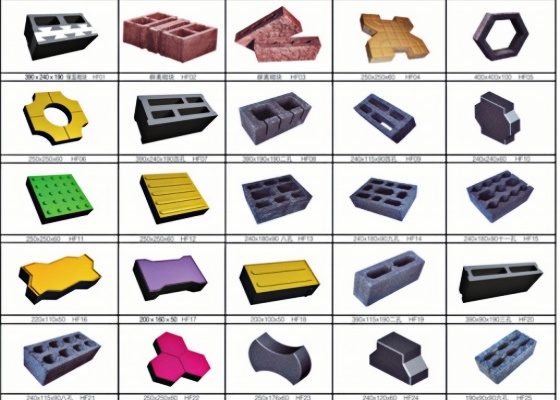
If your focus is hollow blocks for building walls, a high-pressure model with a large mold area is ideal. If you plan to produce pavers or interlocking bricks for landscaping, you’ll need a machine designed for higher vibration frequency and precise shaping.
Hydraulic machines can be equipped with different molds to create:
- Hollow blocks
- Solid blocks
- Paver blocks
- Interlocking bricks
- Curbstones
Choosing a machine that aligns with your main products sets the founation for brand consistency. Also, make sure the mahine supports quick mold change and provides mold options you needed.

Select the Right Automation Level
Automation determines both labor demand and production efficiency.
- Fully automatic : Higher efficiency, minimal labor, best for large factories.
- Semi automatic: More affordable, suitable for medium-scale production.
- Manual-assisted: Lower cost, recommended for beginners or small projects.
Pay Attention to the Hydraulic System
The heart of the machine lies in its hydraulic system. A strong hydraulic pump, stable cylinders, and responsive valves ensure that each block receives steady pressure throughout the cycle. Machines with advanced hydraulic control produce blocks with better density while keeping operation noise low and energy consumption reasonable. This directly affects long-term performance and operating cost.
Evaluate Mold Quality Carefully
Molds determine the final appearance and accuracy of your blocks. A well-designed, heat-treated steel mold lasts longer and produces smooth, precise blocks with fewer defects. Since the mold is a long-term investment, choosing a machine that supports durable, high-quality molds will save significant cost over time.


Consider Technical Support and After-sales Service
Even the best machine needs proper training and maintenance. A trustworthly supplier should provide installation guidance, operation training, and quick-response after-sales service. Reliable support reduces downtime, maintains blodk quality, and ensure your production runs smoothly throughout the year.
Balance Investment with Long-term Profit
Hydraulic machines do cost more upfront, but they deliver higher output, more stable quality, and lower rejection rates. Over the long run, these advantages translate directly into higher profits. Instead of focusing solely on price, consider total lifetime value – this is what truly impacts your business.
FAQs About Hydraulic Block Making Machine
> What materials can I use in a hydraulic block making machine?
Hydraulic block machines are highly flexible when it comes to raw materials. Whether you’re working with standard concrete mixes, fly ash blends, or recycled aggregates, the mahine’s strong hydraulic compaction ensures each mix achieves stable density and strength. This gives manufacturers more freedom to optimize costs without sacrificing quality.
> Are hydraulic block machines suitable for large-scale commercial production?
Absolutely. Thanks to continuous-cycle operation and automatic feeding systems, hydraulic block making machines are built for long production shifts. Manufacturers who upgrade from manual or low-pressure systems often report a noticeable boost in daily output and consistecy – two essential for commercial projects.
> Is the installation and setup difficult?
Most hydraulic block machines are delivered pre-configured, so the intial setup is straightforward. Once connected to power and placed on a level production floor, the machine requires only basic calibration before it starts running. Even first-time users can get the machine operating smoothly with brief training.
> Can a hydraulic system reduce block defects?
Yes. Uniform hydraulic pressure eliminates many common issues like uneven desity, corner cracks, or dimensional variations. This stability is especially valuable for businesses supplying premium blocks where quality consistency directly impacts profit margins and customer trust.
> What kind of maintenance does the machine require?
Maintenance is simple and mostly preventive:
Regular lubrication, hydraulic oil check, and routine cleaning. Modern systems are designed with accessible components, meaning operators can complete most daily and weekly maintenance tasks without specialized technicians – keeping downtime short and productivity high.
> Is it easy to switch between different block sizes or types?
Changing molds is quick and operator-friendly. With a few adjustments, you can shift production from standard hollow blocks to pavers, kerbstones, or solid bricks. This versatility is one of the biggest reasons contractors and block factores upgrade to hydraulic models – they can serve multiple project requirements with one machine.
Get a Quote for a High-pressure Hydraulic Block Making Machine
Looking to upgrade your concrete block production with higher strength, better consistency, and lower operating costs? Our hydraulic block making mahcines are engineered for serious manufacturers who demand reliablity and premium output.
Tell us your required block sizes, production capacity, and project location. We’ll recommend the ideal model and send a personalized quotation within 12 hours.
Get A Free Quote Now
- Fast pricing & technical support
- Optional site layout + production plan
- Machine videos & full specification sheet available
Fill out the form below, and out team will guide you to the right hydraulic block making solution for your business.